Volume & Issue: Volume 8, Issue 6, November and December 2025 
Number of Articles: 18

Molecular docking, synthesis and preliminary pharmacological evaluation of new (2-methyl benzimidazole-1-yl )-N- derivatives having imidazolidinone moiety

Pages 1132-1145

https://doi.org/10.22034/crl.2025.494517.1496

Mariam Saeb Jasim, Monther Faisal Mahdi, Fouad A. AL-Saady

Abstract Abstract :
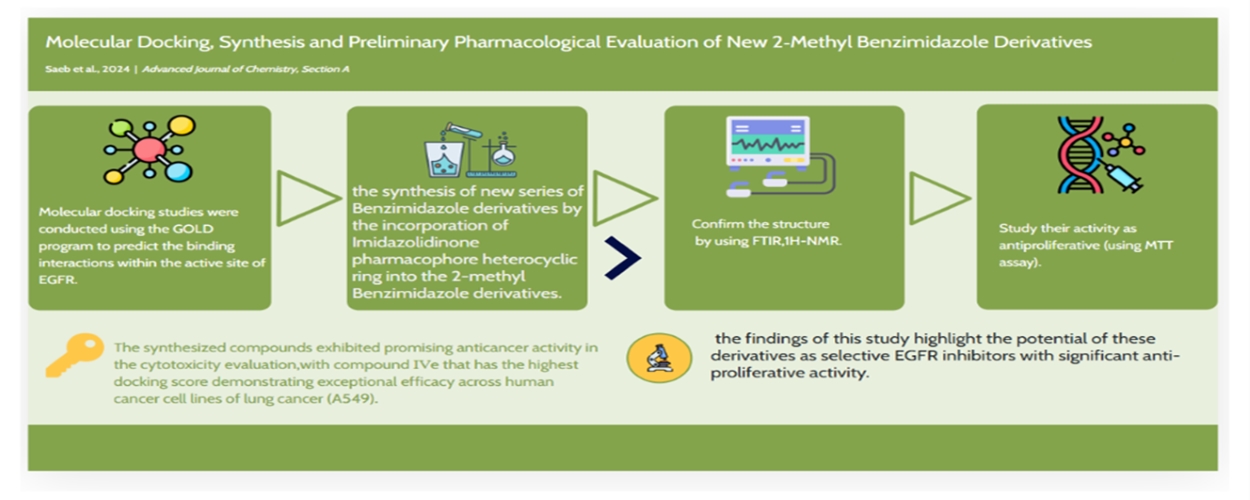
Cancer represents a critical global health challenge, requiring the development of effective targeted therapeutics. Receptor tyrosine kinases (RTKs) play critical roles in cancer cells proliferation and survival; among them, one of the most studied RTK related to cancer cell biology is the epidermal growth factor receptor (EGFR).Receptor tyrosine kinases (RTKs) are integral to the proliferation and survival of cancer cells, with the epidermal growth factor receptor (EGFR) being one of the most extensively studied RTKs in this regard. This study, therefore, aims to design, synthesize, and evaluate novel benzimidazole-based compounds as potential EGFR inhibitors. We devised and synthesized a series of benzimidazole derivatives that incorporate the imidazolidinone pharmacophore. Molecular docking studies were conducted using the GOLD program to predict the binding interactions within the active site of EGFR. Results from the docking analysis indicated that these derivatives exhibited favorable binding affinities and interactions with critical residues, suggesting their potential as EGFR inhibitors. All synthesized compounds were characterized using a range of spectroscopic techniques, including FT-IR and ¹H-NMR, confirming the structural integrity of the compounds. Furthermore, in vitro studies have been initiated to assess the anti-proliferative activities against various cancer cell lines.
This research offers valuable insights into the design and development of novel EGFR inhibitors. The compounds identified exhibit potential as therapeutic agents for cancer treatment and warrant further investigation and optimization.
Electric field-dependent ion selectivity in armchair silicon carbide nanotubes: A molecular dynamics study

Pages 1146-1154

https://doi.org/10.22034/crl.2025.528864.1625

Jafar Azamat

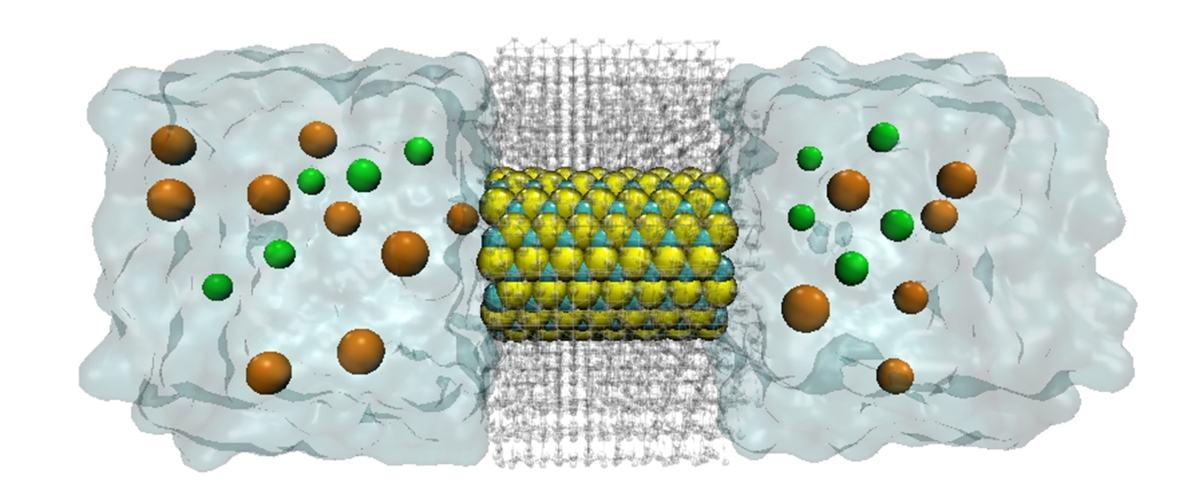
Abstract Utilizing molecular dynamics simulations, this study investigates the mechanisms underlying the transport of magnesium (Mg²⁺) and chloride (Cl⁻) ions through armchair silicon carbide nanotubes (SiCNTs). The simulation framework consisted of a silicon carbide nanotube embedded within a silicon nitride membrane, submerged in an aqueous ionic solution under the influence of an external electric field. Key dynamical and structural properties were analyzed, including ionic current profiles, potential of mean force, ion retention times within the nanotube, radial distribution functions, and the ratio of water molecules transported relative to ions. The findings reveal a strong correlation between nanotube diameter and ion permeation efficiency, with narrower nanotubes exhibiting distinct selectivity and transport kinetics. This diameter-dependent behavior highlights the potential for tailoring SiCNT dimensions to regulate ion flux. Consequently, the study proposes these nanotube-membrane systems as promising prototypes for designing biomimetic ion channels or nanofluidic filtration devices. The results underscore the role of nanoscale confinement and electrostatic interactions in modulating ion transport, offering insights for applications in molecular separation technologies or synthetic biological systems.

Synthesis of silver nanoparticles: A comprehensive review

Pages 1155-1168

https://doi.org/10.22034/crl.2025.514223.1570

Islom Turdikulov, Abdumutolib Atakhanov, Doniyor Ergashev, Mukhlisa Saidmukhamedova, Shokhrux Azamkulov, Sardor Obloberdiyev, Maftuna Majidova, Surayyo Fazilova, Gavharshod Ramazonova, Sabu Thomas, Pietro Calandra

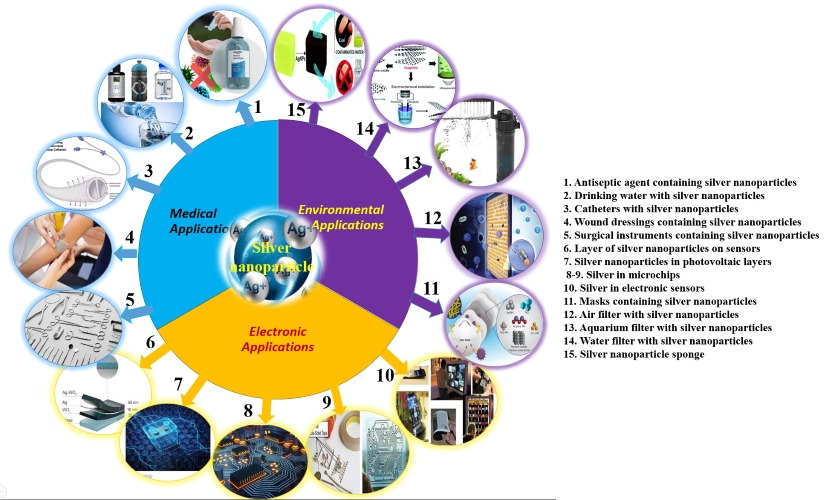
Abstract This review article examines the synthesis of silver nanoparticles (AgNPs), highlighting modern methods in their production. The discussion encompasses chemical, physical, and biological synthesis techniques, detailing the advantages and limitations of each approach. Chemical synthesis often involves reducing agents like sodium borohydride and ascorbic acid, producing nanoparticles with controlled size and shape but posing environmental risks. Physical methods, such as laser ablation and ball milling, offer high-purity nanoparticles but require significant energy and specialized equipment. Biological synthesis, using plant extracts, bacteria, and fungi, provides a green alternative, producing biocompatible nanoparticles though with variable results. Recent advancements emphasize green synthesis methods, particularly the use of gallic acid, a natural antioxidant, which offers a consistent, eco-friendly, and efficient approach to nanoparticle production. After comparing the advantages and disadvantages using the latest literature, the study finds that the biological synthesis method, especially with gallic acid, is the most preferable due to its biocompatibility and ability to produce stable, uniform nanoparticles. The review explores the potential applications of AgNPs in medicine, electronics, and environmental science, concluding that gallic acid-mediated synthesis is particularly suited for biomedical applications. This comprehensive review aims to provide a detailed understanding of AgNP synthesis methods, contributing to the advancement of this crucial field in nanotechnology

Synthesis, molecular docking with CXCR4 and pharmacokinetic/toxicity prediction study of new analogs myristicyl ester

Pages 1169-1178

https://doi.org/10.22034/crl.2025.540750.1675

Kamilia Mustikasari, Gilang Maulana, M. Ariandani, M. Arief Rakhman, Gusti Abnia Fitri, Noer Komari, Azidi Irwan, Maria Dewi Astuti, Mardi Santoso, Taslim Ersam

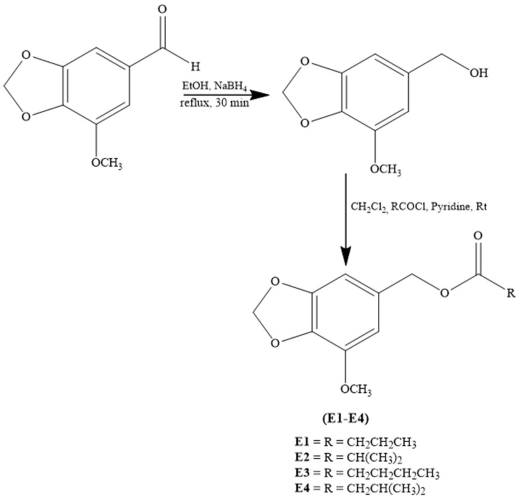
Abstract This study aims to synthesise and characterise a series of new myristicyl esters analogues using a combination of Nuclear Magnetic Resonance (NMR) and Mass Spectrometry (MS). Myristicyl ester compounds, namely 7-methoxy-benzo[d][1,3]dioxol-5-ylmethyl butanoate (E1), 7-methoxy-benzo[d][1,3]dioxol-5-ylmethyl isobutanoate (E2), 7-methoxy-benzo[d][1,3]dioxol-5-ylmethyl pentanoate (E3), and 7-methoxy-benzo[d][1,3]dioxol-5-ylmethyl isopentanoate (E4) were prepared from the reaction between 7-methoxy-benzo[d][1,3]dioxol-5-ylmethanol with acyl chloride. The results showed that the yield of the compounds ranged from 61.6 to 69.7%. In silico molecular docking studies with CXCR4 indicated that E1-E4 had anti-inflammatory potential. Meanwhile, pharmacokinetic and toxicity predictions using pKCSM and Protox showed that E1-E4 complied with Lipinski's rule, with good bioavailability and very low toxicity (LD50 >2000 mol/kg). Despite these results, further in vitro and in vivo studies are needed to support the predictions.

Complexation of Co(II), Ni(II), Cu(II), and Zn(II) with some hydroxy aromatic and heteroaromatic carboxylic acids: Unusual coordination mode of Zn2+ in chloro-bis(1,10-phenanthroline) zinc(II) 3,5-dinitro salicylate

Pages 1179-1187

https://doi.org/10.22034/crl.2025.544285.1682

Rana Abdulillah Abbas, Dui Ling Han, Andrey Utenyshev, Olga Kovalchukova

Abstract
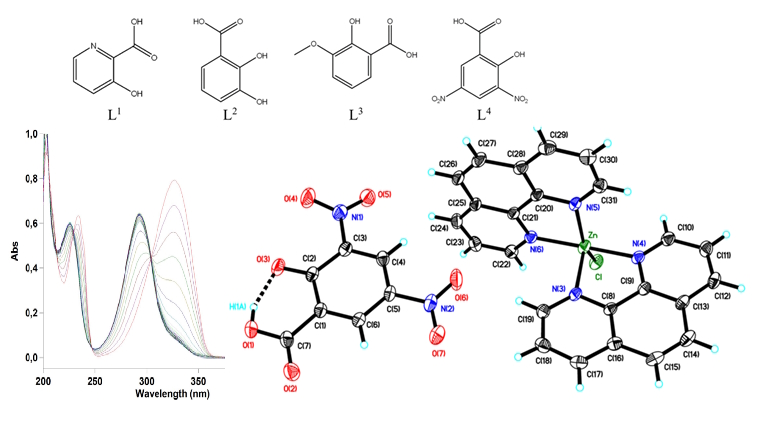
Ten complex compounds of Co(II), Ni(II), Cu(II) and Zn(II) with a number of aromatic and heteroaromatic hydroxy acids were isolated and studied by spectral and structural analysis methods. Potentiometric and spectrophotometric titration methods indicated that the processes of complexation ate accompanied by ionization of the ligands. The ML and ML2 complexes of medium and high stability are formed in neutral and slightly alkaline solutions. The organic ligands coordinate in the form of mono anions and are coordinated through an O-atom of carboxylic groups of the molecules. Crystal structures of three complexes are reported. Introduction of 1,10-phenanthroline to the reactional mixture containing ZnCl2 and 3,5-dinitrosalicylic acid leaded to formation of complex compound with unexpected five-coordinated Zn-atom. The coordination polyhedron is square pyramidal, the donating atoms are four N atoms of two phenanthroline moieties and a chloride anion. The 3,5-dinitrosalicylic acid in the form of monoanion deprotonated by the hydroxy group acts as an outer sphere anion.

DFT study on the mechanism of benzimidazole synthesis from phenylenediamine and formic acid: Activation energies and transition states’ locations

Pages 1188-1199

https://doi.org/10.22034/crl.2025.537649.1665

Reza Behjatmanesh-Ardakani, Huseyn Imanov

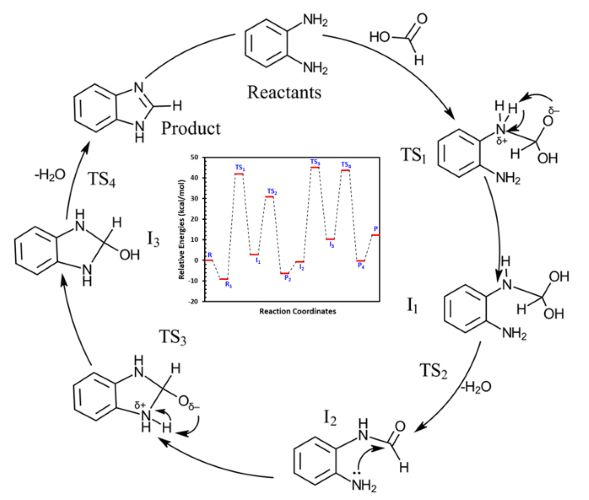
Abstract Benzimidazole and its derivatives are widely utilized in medicinal chemistry. Despite their importance, the development of new synthetic methods for benzimidazole and its derivatives has often relied on trial-and-error approaches, largely because of an incomplete understanding of their synthesis pathways, mechanisms, transition states, and intermediates. In this work, we employ density functional theory (DFT) to investigate the electronic structures of reactants, transition states, intermediates, and products involved in benzimidazole synthesis. We calculate the barrier energy for the four elementary steps using the linear synchronous transit/quadratic synchronous transit (LST/QST) approach. Our results reveal that the dehydration steps exhibit lower barrier energies (TS2 = 27.97 and TS4 = 33.45 kcal·mol⁻¹) compared to the steps involving nitrogen attack on the carbon of formic acid to form the N−C bond (TS1 = 41.93 and TS3 = 45.85 kcal·mol⁻¹). In particular, the third elementary step, with a barrier energy of 45.85 kcal·mol⁻¹, emerges as the rate-determining step in benzimidazole synthesis. Further analysis of the three intermediates (I₁, I₂, I₃) with the quantum theory of atoms in molecules (QTAIM) method characterizes intramolecular hydrogen bonding and atomic charge distribution.

Spectroscopic determination of mercury(II) with dimercaptophenols in the presence of hydrophobic amines

Pages 1200-1210

https://doi.org/10.22034/crl.2025.530343.1633

Kerim Avaz Kuliyev, S. G. Aliyev

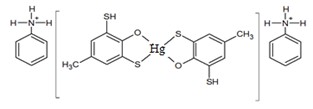
Abstract The extraction of mercury (II) ions from solutions of dimercaptophenolates in chloroform in the presence of hydrophobic amines was studied. Optimum conditions for mercury extraction, pH1/2 parameter and composition of extracted complexes are determined. The following dimercaptophenols (DP) are used: 2,6-dimercaptophenol (DMP), 2,6-dimercapto-4-methylphenol (DMP), 2,6-dimercapto-4-propylphenol (DMPP), 2,6-dimercapto-4-isopropylphenol (DMIPP) and 2,6-dimercapto-4-second-butylphenol (DMSBP). Among the hydrophobic amines used were aniline, N-methylaniline and N,N-dimethylaniline. Among the studied amines, N,N-dimethylaniline has the best extraction ability. It is established that ionic associates are formed in a slightly acidic medium (рНоpt 2.9-4.5). Maximums in light absorption spectra are observed at λ=458-472 nm. The molar coefficient of light absorption is equal to ε = (2.82-3.75)∙104. Based on the obtained data, extraction-spectrophotometric methods for determining mercury in beef liver, cheese, beef meat, fish and wheat were developed.

Direct trifluoromethyl-oximation and -peroxidation of alkenes: An overview

Pages 1211-1221

https://doi.org/10.22034/crl.2025.552446.1705

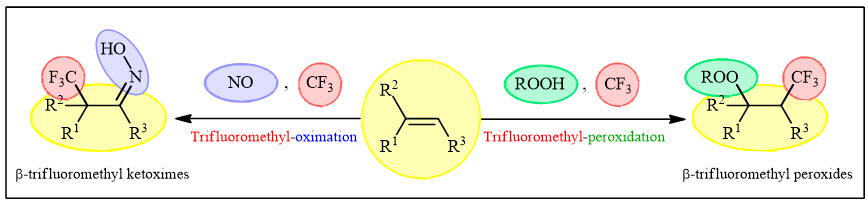
Aziza Babazhanova, Umida Nasritdinova, Gulandom Gozieva, Murad Marasulov, Otabek Mirzaev, Mukhriddin Abdulloev, Shahnoza Doniyorova, Nailya Valeeva, Sojidabonu Qurbonbayeva, Svetlana Atakhanova

Abstract This review provides a comprehensive overview of recent advancements in the direct vicinal trifluoromethyl-oximation and -peroxidation of alkenes, highlighting key catalytic systems, mechanistic insights, substrate scope, and current limitations. The review includes literature published through the end of 2024.

Synthesis and optimization of nickel-iron nano-composite for Grp-78 immunoglobulin purification

Pages 1222-1227

https://doi.org/10.22034/crl.2025.538107.1667

Ali Mohammadi, Jamal Rashidiani, Hamid Babavalian, Mohammad-Sadegh Hashemzadeh, khadijeh Eskandari

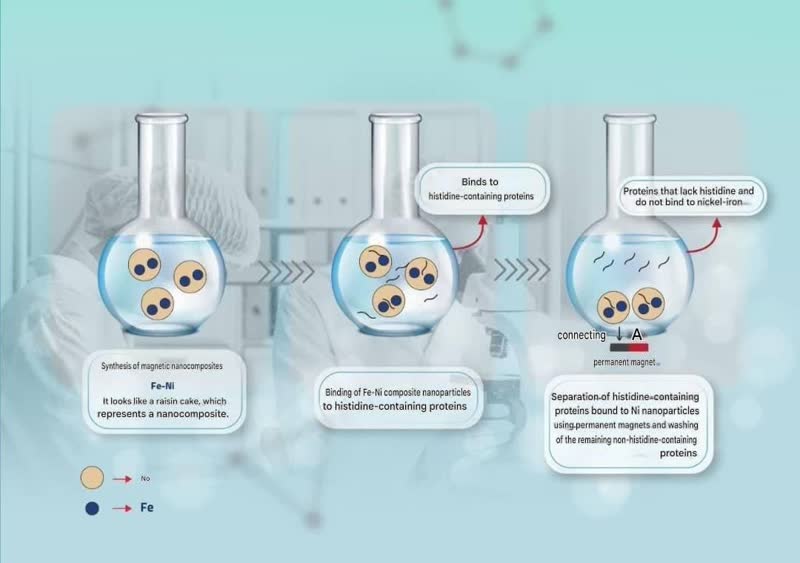
Abstract Background: Protein separation and purification are widely used in all fields of life sciences and biotechnology. The development of new techniques that can replace current common methods increases efficiency and reduces production costs. Magnetic separation is one of the fast and easy methods for separating proteins, cells, and various molecules from the initial raw sample.

Objectives: In the present study, Ni-Fe magnetic nano-composite was synthesized and applicate for separation and collection of recombinant GRP-78 immunoglobulin protein.

Materials and Methods: In this study, Ni-Fe nanocomposites are prepared by oxidation and reduction method. Then, the synthesized nanocomposites in each method are examined by different imaging and spectroscopy methods to measure the size of the nanocomposite and its surface morphology of Nano-composite, the crystal structure, and its stability. In the final stage, these nanocomposites are exposed to bind to protein histidine tag, and then the protein is collected, concentrated, and purified with an external magnet. In this study, the effect of independent variables including protein concentration, solution pH, and reaction time was simultaneously investigated on the dependent variable (size, protein loading) of iron/nickel oxide nanoparticles prepared by precipitation method. Simultaneous study of variables allows for more complete information on how different factors affect the dependent variable.

Results: The present study, the results of the morphology of nanoparticles showed that Ni-Fe Nano-composite had a size smaller than 100 nm and their shape is spherical. Vibrational Magnetometry indicated that the nanocomposite has good superparamagnetic properties and is well attracted by a permanent magnet. Therefore, it is suitable for collecting and purifying proteins from solution. Also, FTIR showed that nickel is abundant on the surface of the nanocomposite and is available for binding to the histidine tag of the protein. Continuing the research, protein loading on Ni-Fe nanocomposites was Optimization for several parameters such as time, temperature, pH, and concentration. Nano-composite can be loaded protein in a wide range of pH from 5.8 to 8.0. The protein loading rate by Ni-Fe Nano-composite is 20 minutes. Temperature analysis also did not show a significant difference in the loading rate. Finally, the evaluation of the efficiency of Iron-Nickel Nano-composite for protein adsorption under optimal conditions indicated the efficiency and ability of the nanocomposite to adsorb a high percentage of protein.

Conclusions: The results indicate that Iron-Nickel Nano-composite can be used as an efficient alternative in the purification of a high percentage of protein. Magnetic affinity and ion exchange separation have been successfully used in various fields such as molecular biology, biochemistry, analytical chemistry, environmental chemistry, etc.

Synthesis, identification, and molecular docking of some new derivatives of ciprofloxacin drug with studying lt's biological activity and anticancer evaluation

Pages 1228-1239

https://doi.org/10.22034/crl.2025.495366.1501

Rawaa A. Ahmed, Maha Salih Hussein

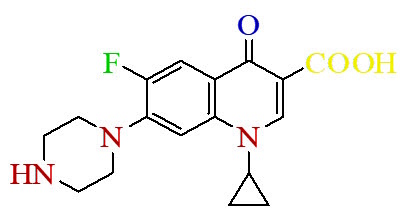
Abstract The antibacterial action of novel diazine compounds against COX-2 was predicted, and their anticancer potential was anticipated. FTIR spectroscopy, 1HNMR, 13CNMR, physical properties, and other techniques were employed to identify and describe the chemicals that were generated. Ciprofloxacin methyl ester molecule [1] was created by reacting ciprofloxacin with methanol while using intense H2SO4. By reacting ciprofloxacin methyl ester with hydrazine hydrate, compound [2] was produced. With glacial acetic acid acting as a catalyst and a solvent, hydrazide derivative [2] reacted with maleic anhydride, succinic anhydride, phthalic anhydride, and 3-nitrophthalic anhydride, respectively, to create diazine compounds [3-6]. The compounds were tested against antibacteria, specifically Staphylococcus aureus (G+) and E.Coli, and their cytotoxic efficacy against two human cancer cell lines (A549 and MCF-7) was assessed. The synthesized compounds were subjected to molecular docking tests.

Direct azido-halogenation of olefins: A comprehensive review

Pages 1240-1252

https://doi.org/10.22034/crl.2025.552717.1707

Zarina Babaeva, Davronbek Yulchiev, Nematillo Mamatkulov, Mukhlisa Madrakhimova, Islom Kadirov, Sanobar Rizayeva, Mokhinur Umarova, Nurali Rahmonov, Sarboz Nurov, Sevara Babanazarova

Abstract This review comprehensively covers both recent and foundational studies on the direct vicinal azido-halogenation of alkenes to produce 1,2-haloazides. It is organized into four main sections based on the halogen involved: (i) azido-fluorination, (ii) azido-bromination, (iii) azido-chlorination, and (iv) azido-iodination. Within each section, the reactions are further classified by their regioselectivity, highlighting Markovnikov versus anti-Markovnikov outcomes to provide insight into their mechanistic pathways and selectivity patterns.

A new polyamine containing imine group as a fluorescent chemosensor with high selectivity for Fe3+

Pages 1253-1257

https://doi.org/10.22034/crl.2025.547902.1697

Reza Golbedaghi, Nargess Ajami, Farzad Soleymani

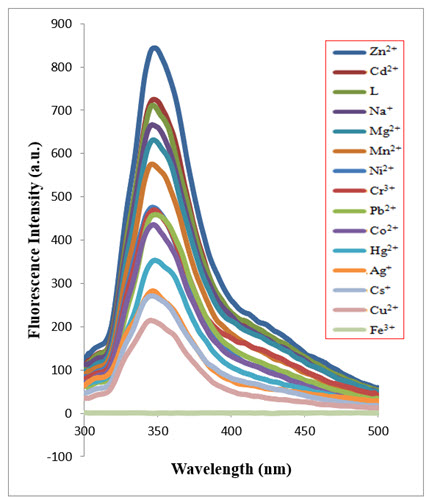
Abstract A new fluorescent sensor (L) based on imine group including oxygen has been investigated in this work. Chemosensor (L) exhibited highly selective and sensitive fluorescence sensing ability for Fe3+ over other metal ions in a mix of H2O-DMF solution. The new fluorescence quenching response of (L) for Fe3+ indicated that (L) can be used as ‘‘turn-off’’ fluorescent chemosensor to selectively detect Fe3+. The fluorescent sensor (L) was synthesized by the template condensation of salicylaldehyde and a new tetraamine 1:2 molar ratio and characterized by IR, NMR spectroscopy and elemental analysis.

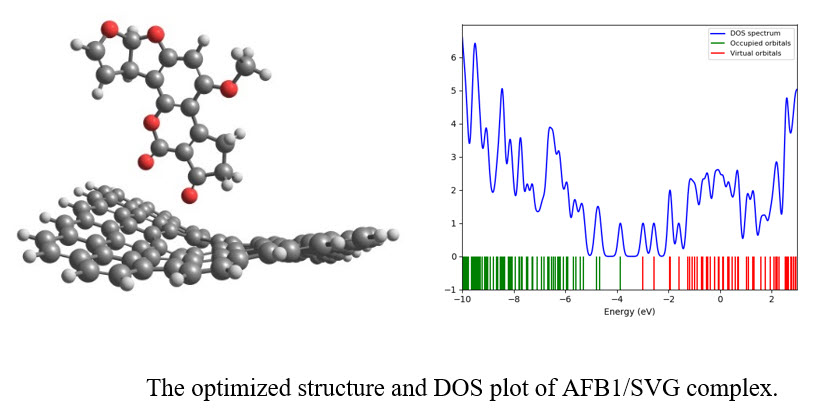
DFT investigation of aflatoxin B1 adsorption on vacancy-defective graphene: electronic properties and sensing potential

Pages 1258-1268

https://doi.org/10.22034/crl.2025.544347.1683

Mohammad Haqgu, Zahra Rostami, Azizbek Mengboev

Abstract Aflatoxins (AFs) are highly toxic compounds that pose substantial health risks, eliciting both Aflatoxin B1 (AFB1) is a highly toxic mycotoxin with severe health implications, necessitating rapid and sensitive detection methods. This study aims to investigate the potential of defect-engineered graphene nanosheets as electronic sensors for AFB1 detection. Using density functional theory (DFT), the adsorption behavior of AFB1 on perfect graphene (PG), single-vacancy graphene (SVG), and double-vacancy graphene (DVG) was systematically analyzed. The results reveal weak physisorption on PG, with minimal influence on electronic properties, whereas vacancy defects introduce reactive sites that markedly enhance adsorption strength and sensor response. In SVG, adsorption lowers the energy gap from 0.81 eV to 0.54 eV and decreases the work function from 3.57 eV to 3.53 eV, leading to increased conductivity and field emission current. Atoms in Molecules (AIM) analysis indicates that interactions are predominantly van der Waals in nature, confirming a physisorption-dominated mechanism. These findings demonstrate that single-vacancy defective graphene offers superior sensitivity and electronic modulation, underscoring its promise as an efficient nanosensor for AFB1 detection and highlighting the critical role of defect engineering in graphene-based sensor design.

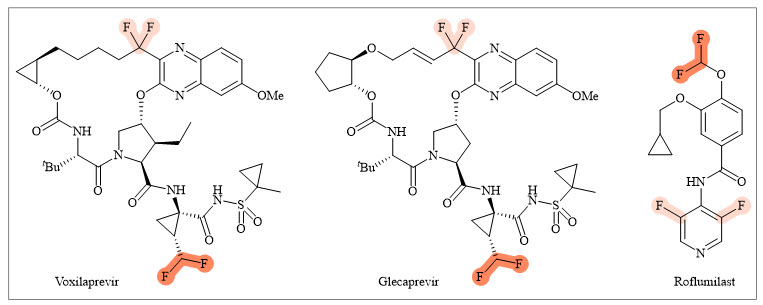
Recent advances in direct 1,2-hydroxydifluoromethylation of olefins

Pages 1269-1277

https://doi.org/10.22034/crl.2025.553447.1710

Roza Shukrullozoda, Nargiza Masharipova, Shakhzod Turabekov, Fakhriddin Madaminov, Dilshod Boltabayev, Matluba Turaeva, Saodat Khamidova, Rashidbek Buriev, Laziza Meyliyeva, Gulshod Usmonova

Abstract Due to its important role in drug discovery and its ability to significantly modify the physicochemical and biological properties of bioactive compounds, considerable research efforts have recently focused on the development of efficient and selective methods to incorporate the difluoromethyl group into organic molecules. In this context, the direct vicinal hydroxylative difluoromethylation of olefinic double bonds has emerged as an efficient one-step strategy for the synthesis of β-difluoromethyl alcohols from cheap and widely available starting materials. In this review, we provide an overview of the latest developments in this rapidly evolving field, aiming to stimulate further research and innovation.

Design, synthesis, molecular docking, and preliminary pharmacological evaluation of new thioimidazole -4-one derivatives

Pages 1278-1294

https://doi.org/10.22034/crl.2025.501629.1526

Noor Mohammed Mousa, Abdull Jabar Attia, Karima Fadhil Ali

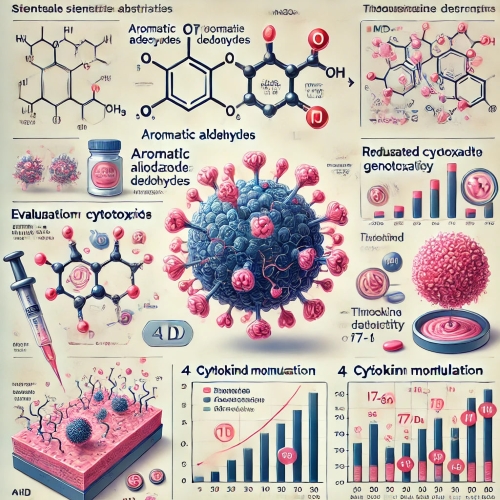
Abstract This study investigates the synthesis, cytotoxic activity, and DNA-damaging potential of novel compounds targeting asthma-related pathways, particularly the A2A adenosine receptor. Eight synthesized compounds (4a-d, 7a-d) were evaluated for their cytotoxicity using the MTT assay on RAW 264.7 cells, with Theophylline as a standard. Compound (7d) demonstrated the least cytotoxic effect, while (4a-d) exhibited strong inhibitory activity with low IC₅₀ values. DNA damage was assessed using the comet assay on peripheral blood mononuclear cells (PBMCs). Hydrogen peroxide (H₂O₂) was used as a positive control, producing significant DNA fragmentation, while (7d) showed minimal DNA migration, indicating a potentially safer genotoxic profile. Binding interactions with the A2A receptor were explored through molecular docking, revealing hydrogen bonding and key short contacts with specific receptor residues. Compounds (4b) and (7a) achieved high PLP fitness scores, underscoring their strong receptor affinity. These findings highlight the potential of these compounds for further exploration as asthma therapeutics with selective targeting capabilities and minimized cytotoxic and genotoxic effects. Novel compounds reduced LPS-induced cytokine levels, showing potential anti-inflammatory effects, particularly for TNF-α, IL-6, and IL-1 modulation.

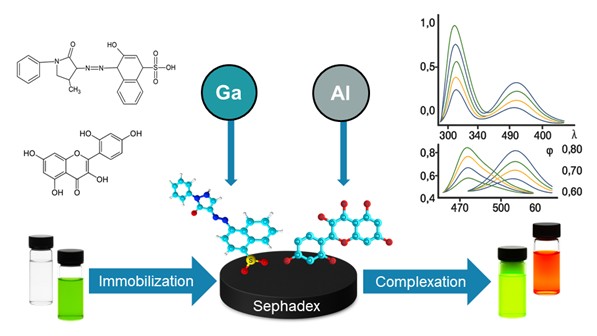
Sorption–fluorescence determination of aluminum(III) and gallium(III) using immobilized organic reagents

Pages 1295-1306

https://doi.org/10.22034/crl.2025.540565.1674

Khikmat Shavkatovich Bobojonov, Khilola Umatalievna Usmanova, Zulaykho Asanalievna Smanova, Jamoliddin Nasiriddinovich Todjiyev, Dilfuza Anvarovna Gafurova, Muborak Maksumovna Abdullaeva, Jasur Baxtiyorovich Tursunqulov, Ibrokhim Bayramdurdiyevich Sapaev, Muyassar Fathullaeva, Umida Asanaliyevna Yuldasheva

Abstract This work reports the development of novel sorption–luminescent methods for the determination of aluminum (Al³⁺) and gallium (Ga³⁺) ions using immobilized organic reagents – morin and Eriochrome Red B. The novelty of the study lies in the integration of solid-phase immobilization with luminescence spectroscopy and quantum-chemical modelling (pKa, pKa*, fluorescence quantum yield analysis, DFT/AM1), which enabled interpretation of complexation mechanisms and protolytic equilibria. Optimal immobilization conditions on polymeric carriers (pH, contact time, carrier type) were established, ensuring high reagent loading and signal stability. The developed methods achieved detection limits as low as 0.0006 µg/mL for Al³⁺ and 0.0078 µg/mL for Ga³⁺, excellent linearity of calibration plots (R² ≥ 0.999), short analysis time (≤5 minutes), and good repeatability (Sr = 0.10 and 0.08). Measurements were performed at pH 4.0–6.0 (λ = 540 nm) for Al³⁺ and pH 3.0–5.0 (λ = 651 nm) for Ga³⁺. Application to natural and industrial wastewater samples demonstrated analytical reliability and practical applicability for routine environmental monitoring. The results highlight the environmental significance of monitoring toxic Al³⁺/Ga³⁺ species and show that the developed reagent–carrier systems can serve as sensitive layers for optical sensor devices, providing a robust and versatile platform for environmental sensing.

Enhancing energy efficiency of LPG separation units through pinch-based heat integration in refinery operations

Pages 1307-1317

https://doi.org/10.22034/crl.2025.529567.1695

Ahmed Ould Brahim, Souad Abderafi

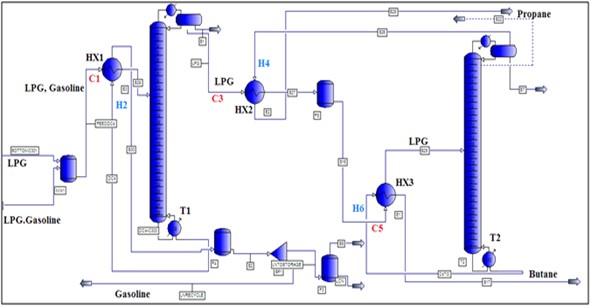
Abstract The separation of Liquefied Petroleum Gas (LPG) in oil refineries typically relies on two highly energy-intensive distillation columns: the debutanizer and the splitter. Their significant heat demand contributes directly to elevated operating costs and greenhouse gas emissions. This study aims to enhance the energy efficiency of these units through a heat-integration strategy based on Pinch Technology. Industrial operating data from an active refinery were used to simulate the existing configuration in PRO/II software employing the Peng–Robinson equation of state. The model was validated, showing satisfactory agreement between simulated and actual plant performance. A new heat-integrated configuration was then proposed by introducing three process-to-process heat exchangers to recover and reuse thermal energy within the LPG separation train. Simulation of the optimized design reveals a 23.46% reduction in overall energy consumption and a 33.17% decrease in CO₂ emissions compared with the conventional setup. These results demonstrate that systematic heat integration offers an effective pathway to improving both the energy and environmental performance of LPG distillation systems.

Synthesis and preliminary antimicrobial activity evaluation of some new 4-aminoantipyrine derivatives

Pages 1318-1324

https://doi.org/10.22034/crl.2025.513623.1567

Sumayah Saadi Abbas, Azhar Mahdi Jasim, Mohammed Kamil Hadi, Mohammed Abdulameer Oleiwi, Maadh Qusay Abdulkadir, Alaa Radhi Khudhair

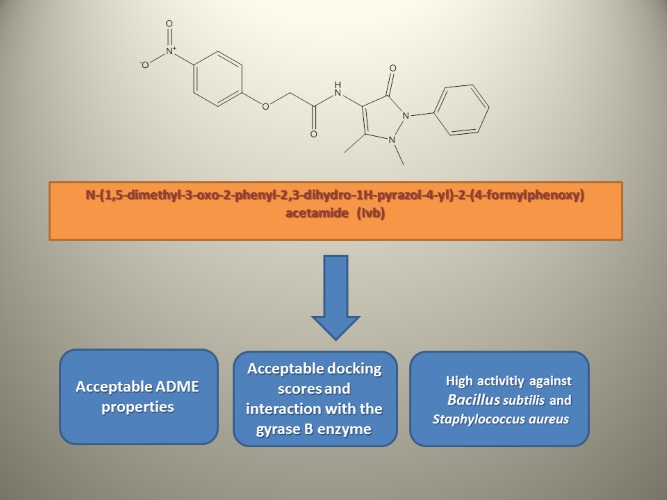
Abstract A new series of S- and O- alkylated derivatives of 4-aminoantipyrine ( IIIa, IIIb, IVa-IVc) have been synthesized from 2-chloro-N-(1,5-dimethyl-3-oxo-2-phenyl-2,3-dihydro-1H-pyrazol-4-yl) acetamide (II) by using deferent thiols and phenols. The target compounds had acceptable docking scores and interaction with the gyrase B enzyme and had acceptable ADME properties. The effectiveness of the newly synthesized derivatives as antimicrobial agents was evaluated in vitro against two G-positive and two G-negative bacteria, and fungi. All compounds had a high level of activity against tested microbes. Compound (IVb) showed the highest activitiy against Bacillus subtilis and staphylococcus aureus compared to other compounds while compound (IVc) was more effective against Escherichia Coli, pseudomonas aeruginosa, and Candida albicans than other compounds. The final compounds were confirmed by TLC, ATR-FTIR and 1HNMR.