Volume & Issue: Volume 8, Issue 1, Winter 2025 
Number of Articles: 18

Effective removal of cefixime and amoxicillin from aqueous solutions using ZnO/Fe3O4@GO magnetic nanocomposites

Pages 2-10

https://doi.org/10.22034/crl.2024.472667.1402

Hamid Reza Ghorbani, Seyyed Komeil Hosseini Sfandani, Fatemeh Ardestani, Mehri Sfahanian, Zinatossadat Hossaini

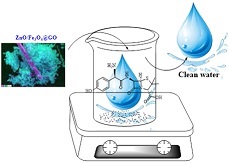
Abstract The water extract of Petasits hybridus leaves was used in this study to create the high-performance ZnO/Fe3O4@GO magnetic nanocomposites, which were then used as an environmentally friendly adsorbent for the removal of amoxicillin (AMX) and cefixime (CFX). The initial concentrations of CFX and AMX, contact time, solution pH, temperature, and adsorbent dose were among the adsorption parameters that were examined. The pseudo second-order and Langmuir models, respectively, provided good fits to the adsorption kinetic and isotherm. When CFX and AMX are adsorbed onto ZnO/Fe3O4@GO nanocomposite, the initial amounts are 10 mg. Moreover, ZnO/Fe3O4@GO adsorb CFX and AMX at pH values of 6 and 8.5 respectively. The low cost of the adsorbent, its great efficiency, and its ease of use are its advantages.
Molecular Simulation of Gabapentin Intercalation in the Interlayer Space of Zn2 AL-LDH: Molecular Dynamic of Drug Delivery

Pages 11-19

https://doi.org/10.22034/crl.2024.469191.1389

Jila Talat Mehrabad, Farzad Arjomandi Rad, Mehrdad Molaei

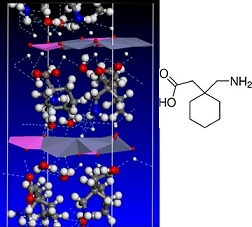
Abstract Drug delivery is the process of administering drugs or other drug compounds to achieve a therapeutic effect. Drug delivery has become an important issue in the pharmaceutical industry in the last few decades, with the use of this system, the speed of drug release as well as drug control by doctors is possible. Layered double hydroxides (LDHs) are a group of anionic clays with a structure It is a layer with good drug release control properties. In this work, the molecular simulation (quantum) and (molecular dynamics) of the drug gabapentin interlayered in Zn2Al-LDH were carried out. First, the modeled gabapentin molecule was quantum simulated by the DFT method. Properties extracted from quantum studies such as partial molecular charge and molecular orbitals were investigated, and then after designing a special cell for the Gabapentin-Zn2Al-LDH combination, classical mechanics and molecular dynamics simulation were performed. Finally, important properties such as X-ray diffraction comparison were calculated. experimentally (in past work). The characterization results of the Zn2Al-LDH nanohybrid also showed that there is a good agreement between the X-ray diffraction and the simulated XRD (d003=8.74 Å) and the angular distribution of the drug was relatively horizontal. According to molecular dynamic simulation, the results of Mean Square Displacements or MSD (the simulated drug delivery) showed that water molecules were released faster than drug molecules from the Zn2Al-LDH hybrid structure (0.11 intensity of water per time step versus 0.07 of drug).

Advances in the formation and properties of nanofiber biomaterials from polyvinyl alcohol/carboxymethylcellulose/nanosilver systems for medical applications

Pages 20-38

https://doi.org/10.22034/crl.2024.473962.1409

Khaydar Ergashovich Yunusov, Mirafzal Muzaffar o`g`li Mirkholisov, Malika Askarovna Azizova, Javlon Zafar o`g`li Jalilov, Sardor Sobirjanovich Yarmatov, Jamoliddin Nasiriddinovich Todjiyev, Abdushkur Abdukhalilovich Sarimsakov, Abdumutolib Abdupatto o`g`li Atakhanov, Jiang Guohua, Aleksandr Alexandrovich Rogachev

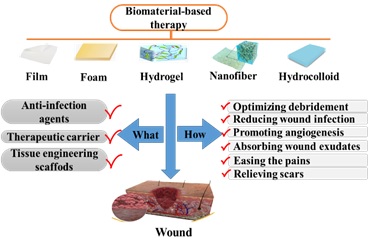
Abstract Poly (vinyl alcohol) (PVA) and sodium-carboxymethylcellulose (Na-CMC) are hydrophilic polymers with excellent biocompatibility and biodegradability and have been applied in various biomedical areas due to their favorable properties. Polyvinyl alcohol/sodium-carboxymethylcellulose composites have attracted considerable attention due to the synergistic relationship between the two polymers and the development of novel blends with improved properties. On the one hand, polyvinylalcohol is a versatile polymer with better mechanical properties than sodium-carboxymethylcellulose. On the other hand, sodium-carboxymethylcellulose has high biodegradability and biocompatibility but suffers from poor mechanical properties. This review highlights recent progress in the fabrication, properties, and potential applications of polyvinyl alcohol/sodium-carboxymethylcellulose/silver nanoparticles composites based on nanofibers in the fields of drug delivery, food packaging, and biomaterials for curing burns and wounds.

Machine Learning-Driven Characterization of Optical Materials: Predicting JO Parameters in Rare-Earth Doped Glasses

Pages 39-51

https://doi.org/10.22034/crl.2024.488643.1474

Juginder Pal Singh, Abdullah Al Hossain Newaz, Makarand B Shirke, Paul Marcelo Tacle Humanante, Man Djun Lee, Vivek Kumar Pandey

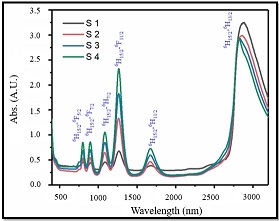
Abstract This paper presents a machine learning-driven approach for predicting the spectroscopic properties of rare-earth (RE) doped glass systems, with a focus on Dy3+ ions. Glass compositions of 0.25 PbO–0.2 SiO2–(0.55−x) B2O3–x Dy2O3 were synthesized using the melt-quenching technique, and their density, molar volume, and Judd–Ofelt (JO) parameters (Ω2, Ω4, Ω6) were experimentally determined. The Judd–Ofelt theory was applied to calculate spectroscopic parameters such as oscillator strengths, radiative transition probabilities, and radiative lifetimes for Dy3+ doped glasses. Furthermore, a Random Forest (RF) regression model was developed to predict these parameters based on the composition of the glass. The model showed high accuracy, with R² values above 0.9 and root-mean-square errors (RMSE) under 0.1, validating the use of RF for reliable predictions of optical properties. The results indicate that the RF model can effectively simulate the luminescent properties of RE-doped glasses, significantly reducing the need for experimental testing. This approach offers potential for optimizing the design of optical materials used in applications such as lasers, optical amplifiers, and temperature sensors.

A density functional theory study of adsorption dimethyl fumarate on the surface of the pristine of g-C3N4 and Fe, Ni and Cu decorated graphitic carbon nitride

Pages 52-67

https://doi.org/10.22034/crl.2024.454286.1327

Isaac Vaziri, Issa Amini, Mohammad Reza Poor Heravi, Rovnag Rzayev

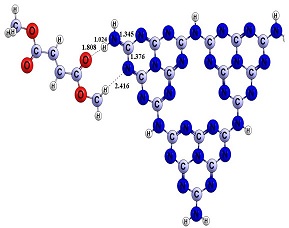
Abstract In the present work, the adsorption of dimethyl fumarate drug (DMF) on g-C3N4 was studied using periodic and non-periodic density functional theory (DFT). PBE-D3/DNP and B3LYP-D3/6-31G(d) levels of theory were employed for periodic and non-periodic calculations, respectively. The calculated CS2, OCS, and CH3SH adsorption energies were obtained to be −4.35, −5.82, and −8.58 Kcal/mol. The interactions of dimethyl fumarate drug (DMF) with g-C3N4 were characterized by NBO second-order perturbation theory and quantum theory of atom in molecule (QTAIM). The bandgap energies and work function of g-C3N4 and its complexes with dimethyl fumarate drug (DMF) were extracted from their band structures. The CS2 and OCS adsorptions didn’t significantly alter the bandgap and work function of g-C3N4. Therefore, g-C3N4 is not a proper sensor for detecting CS2 and OCS. The bandgap and work function of g-C3N4 were averagely changed by 18% and 2.7%, respectively, after CH3SH adsorption. Accordingly, g-C3N4 may use as a suitable sensor for detecting CH3SH based on electronic conductivity and work function.

Direct C-H difluoromethyl(thiol/selenol)ation of terminal alkynes: A review

Pages 68-76

https://doi.org/10.22034/crl.2024.492011.1486

Khadijeh Didehban, Aytan A. Niyazova, Garay S. Mirzoev, Ilhama F. Allahverdiyeva

Abstract The aim of the present review is to summarize the recent advances in the direct C-H difluoromethyl(chalcogen)ation of terminal alkynes. Hopefully, it can provide practical guidance for the readers who are interested in fluoroalkylation reactions. For simplicity and clarity, the review is divided into three sections: (i) difluoromethylation reactions; (ii) difluoromethylthiolation reactions; and (iii) difluoromethylselenolation reactions.

Theoretical investigation of sulfur impurity on the structural, electronic and optical properties of C3N monolayer

Pages 77-83

https://doi.org/10.22034/crl.2024.474907.1413

Erfan Cholaki, Borhan Arghavani Nia, Robab Mohammadi, Beheshteh Ajdari

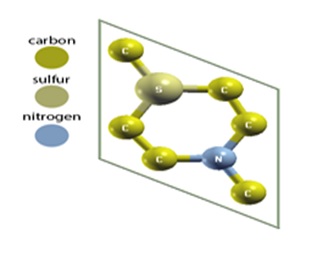
Abstract In this article, structural, electronic and optical properties of monolayer doped with sulfur atom were investigated using density functional theory with WIEN2k computational code. The study of the electronic properties reveals that by replacing the sulfur atom with the nitrogen atom, the nature of the pure monolayer structure changes from semiconductor to metal. The examination of the optical properties in both x and z directions demonstrates the optical anisotropy of this structure. Due to the difference in the energy levels of the orbitals and the large size of the sulfur atom compared to the carbon and nitrogen atoms in the C3N structure, this atom acts as a disturbance factor causing a decrease in the degeneracy of the energy levels, so there is no sharp peaks corresponding to degeneracy transition in this structure.

Preparation and Application of Loess-based Adsorbent for the Removal of Lead ions from Aqueous Solution

Pages 84-100

https://doi.org/10.22034/crl.2024.487321.1468

Tehmina Bano

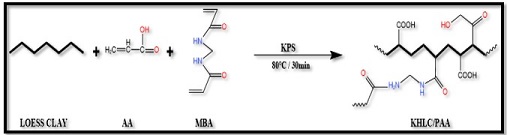
Abstract Loess is a naturally occurring mineral particle that is widely dispersed around the planet. It is also affordable, non-toxic, and readily accessible. A loess clay-based co-polymer, KHLC/PAA, was produced to support the functional monomer acrylic acid in an in situ polymerization process using N-N methylene bisacrylamide as a cross-linking agent. It was characterized by Scanning Electron Microscopy, Fourier Transformation Infrared spectroscopy, X-ray diffractometry, X-ray fluorescence spectroscopy, and thermal gravimetric analysis, followed by the examination of its adsorption capability for removing lead ions (Pb2+) from aqueous solution at room temperature in 60 minutes, which appeared to be 159.1 mg/g. The thermodynamic data showed that the adsorption process was practicable, spontaneous, and endothermic, and the experimental results suited the pseudo-second-order kinetic model and the Langmuir adsorption isotherm well. Consequently, KHLC/PAA is a potentially beneficial material for wastewater treatment as it is an inexpensive, environment-friendly adsorbent.

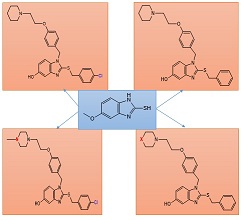
Design, Molecular Docking study, Synthesis, and Preliminary Cytotoxic Evaluation of Some New 5-Methoxy-2-mercaptobenzimidazole Derivatives

Pages 101-111

https://doi.org/10.22034/crl.2024.475999.1414

Shahbaa Shafeeq Rzoqi, Mohammed Hassan Hassan Mohammed

Abstract Benzimidazole scaffolds are biologically and therapeutically useful chemical motifs against several diseases. Several derivatives are already known for benzimidazole, one of the most important derivatives known is 2-mercaptobenzimidazole with numerous biological activities were reported viz. antimicrobial, antiviral, anti-tumor and anti-inflammatory. Thus, several 2-mercaptobenzimidazole derivatives were designed and directly prepared through S-alkylation with four different para-substituted 1-bromomethyl benzene and N-alkylation with 1-(2-chloroethyl)piperidine, 1-(2-chloroethyl)-4-methylpiperazine and 1-(2-chloroethyl)-4-morpholine moieties with potential cytotoxic activities against breast cancer. Prior to the synthesis of the target compounds, docking studies were conducted which showed good docking scores compared to the standard raloxifene against estrogen receptor alpha (ERα), which is considered one of the main molecular targets in breast cancer pathogenesis. The synthesis of the target compounds 14 a-d was successful, and their structures were confirmed with FT-IR, 1H NMR, 13C NMR, and ESI-MS analysis. The in-vitro cytotoxicity assay (MTT assay) demonstrated that compound 14c possesses excellent cytotoxic effects towards breast cancer cell line (MDA-MB-231: IC50: 24.78± 1.02 µM), compared to standard raloxifene with an IC50: 26.73 µM. From the docking study, it was concluded that piperidine, methyl-piperazine and morpholine moiety successfully bind tightly to alpha estrogen receptors by making numerous interaction modes.

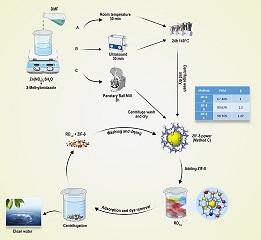
Zeolitic-imidazolate Framework Synthesized with the Mechanochemical Method: Impressive Removal of Nine Reactive Dyes of Wastewaters

Pages 112-127

https://doi.org/10.22034/crl.2024.483081.1448

Ashraf Sadat Shahvelayati, Shabnam Alibakhshi, Maryam Ranjbar

Abstract The effective elimination of dyes from the aquatic environment is one of the serious environmental goals. Herein we describe the synthesis (by the Mechanochemical Method), and application of a catalyst zeolitic-imidazolate framework (ZIF-8) for the impressive removal of various types of dyes such as Remazol golden yellow RNL(RD1), Blue94(RD2), Red141(RD3), Violet-5r(RD4), Red66(RD5), Red195(RD6), Red120(RD7), Yellow160(RD8), Yellow176(RD9) in the wastewaters through the adsorption process. The effects of temperature, pH, dye concentration, contact time, and adsorption dose on the adsorption process were investigated and optimized. The isotherm models were studied through four-parameter equations, Freundlich, Langmuir, Tepmkin, and Dubinin-Radushkevich. The adsorption isotherm data showed the Langmuir model was the consistent model. The COD and BOD in the real sample were determined in the presence of the catalyst, and results show the values of BOD and COD were significantly reduced. The structure of the synthesized catalyst was characterized by various techniques including FTIR, SEM, XRD, specific surface area, and BET. The high adsorption capacity, reusability, and recyclability of the catalyst were some of the advantages of the prepared catalyst.

This catalyst was utilized as an efficient adsorbent for the removal of dyes from textile wastewater. The observed results show a significant reduction in BOD and COD using the prepared catalyst

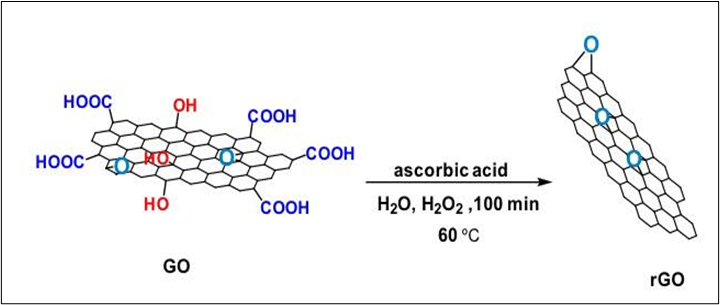
Thermodynamic, kinetic studies and adsorption conditions for removal of dye from aqueous solution using Reduced Graphene Oxide (RGO).

Pages 128-136

https://doi.org/10.22034/crl.2024.479028.1421

Zainab H Hussein, Faiq F. Karam, Nabeel Rahi Mashkur

Abstract The aim of this work is to create reduced graphene oxide from graphene oxide synthesized by the Tour method and then reduce it using ascorbic acid. We used field emission scanning electron microscopy (FESEM), Fourier transform infrared (FTIR), and Raman spectroscopy to examine and measure the data. In the current study, we used RGO to adsorp and remove methyl orange dye (MO). We investigated the effects of pH and ionic density on the dye removal process, as well as the surface weight of the adsorbent and the length of time the dye remained in contact with RGO. We considered the temperature, isotherms, and adsorption kinetics and came to some final conclusions.

Comprehensive review of Rational Irreversible Thermodynamics

Pages 137-143

https://doi.org/10.22034/crl.2025.460915.1348

MEGHA SARANG SAWANGIKAR, PKP Gaitry Chopra, Bharati Chandrakant Burande, Prajakta Waghe

Abstract This research paper presents a critical study of the ‘Rational irreversible thermodynamics’ framework on evaluating its theoretical foundations and practical applications. A comprehensive review of existing framework and theoretical analysis has been carried out. We identify the principles, assumptions, and limitations inherent in rational irreversible thermodynamics. Our findings highlight discrepancies between theoretical predictions and experimental observations, particularly in highly non-equilibrium systems. The critical evaluation presented in this study elucidates the challenges and opportunities in rational irreversible thermodynamics, leading the way for future research.

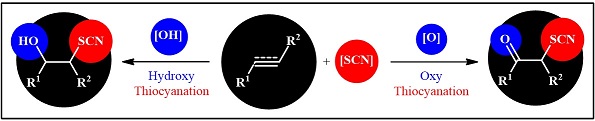
Recent advances in the synthesis of α-thiocyanatoketones and β-thiocyanato alcohols through the direct oxy-/hydroxy-thiocyanation of unsaturated hydrocarbons

Pages 144-154

https://doi.org/10.22034/crl.2025.495049.1499

Khadijeh Didehban, Ramil A. Sadigov, Samira S. Maharramova, Sevda E. Abbasova, Priyanshu Verma

Abstract The objective of the present review is to give an overview on recent advances on the synthesis of α-thiocyanatoketones and β-thiocyanato alcohols through the direct oxy-/hydroxy-thiocyanation reactions of unsaturated hydrocarbons. The literature has been surveyed up until the end of October 2024. We hope that this review will inspire the development of novel thiocyanative difunctionalization reactions and improve the efficiency of existing ones.

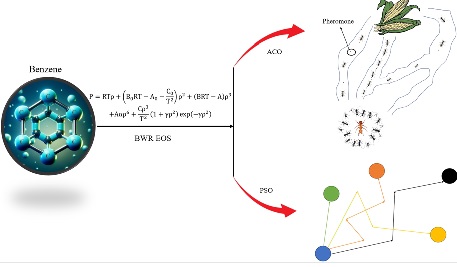
Determining the best constants of the eight-parameter non-Linear BWR equation using PSO and ACO algorithms to predict the PVT behavior of benzene

Pages 155-164

https://doi.org/10.22034/crl.2025.453612.1326

Pouya Es'haghi, Keivan Shayesteh, Hassan Seddighi

Abstract Precision in computational analyses and simulations is paramount in the oil and gas sector. A critical aspect of these calculations involves ascertaining the molar density of gases and liquids under varying pressure and temperature conditions. For this purpose, the Benedict-Webb-Rubin (BWR) equation of state (EOS) stands out as a robust instrument for approximating the fluid's pressure-volume-temperature (PVT) properties. This article aims to introduce an effective technique for refining the BWR EOS by employing Particle Swarm Optimization (PSO) and Ant Colony Optimization (ACO) algorithms. The Super-Halley method was used to determine the molar volume or molar density. This article details how, using a dataset of 360 experimental observations, the most effective constants (comprising eight parameters) were ascertained utilizing the PSO and ACO algorithms. Furthermore, an additional set of 50 experimental data points was analyzed to assess the accuracy of the BWR EOS. The results indicated an error margin of 2.164% for PSO and 2.768% for ACO, respectively. Subsequently, the predictive error associated with the 11-parameter Benedict-Webb-Rubin-Starling (BWRS) equation was found to be 3.75%. In contrast, the simpler, three-parameter Soave-Redlich-Kwong (SRK) equation exhibited a notably higher error rate of 9.866%. These findings underscore a general trend: as the number of parameters in an EOS increase, the prediction error tends to decrease. Interestingly, its error rate is approximately double even though the BWRS equation features three additional parameters compared to the empirical BWR equation. This observation suggests that experimental approaches significantly enhance predictive accuracy despite the increased computational demands in determining optimal constants.

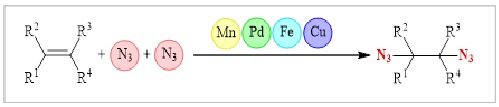
Recent advances on transition-metal-catalyzed 1,2-diazidation of alkenes

Pages 165-177

https://doi.org/10.22034/crl.2025.499322.1522

Esmael Sanchooli, Maya J. Karimova, Kamala A. Mustafayeva, Sevinj I. Maharramova, Rahul Raj Chaudhary

Abstract In this review, recent works on transition-metal-catalyzed direct diazidation of alkenes into aliphatic 1,2-diazides are described. 1,2-Diazides are one of the most versatile intermediates in organic synthesis and are often employed for the preparation of biologically important 1,2-diamines.

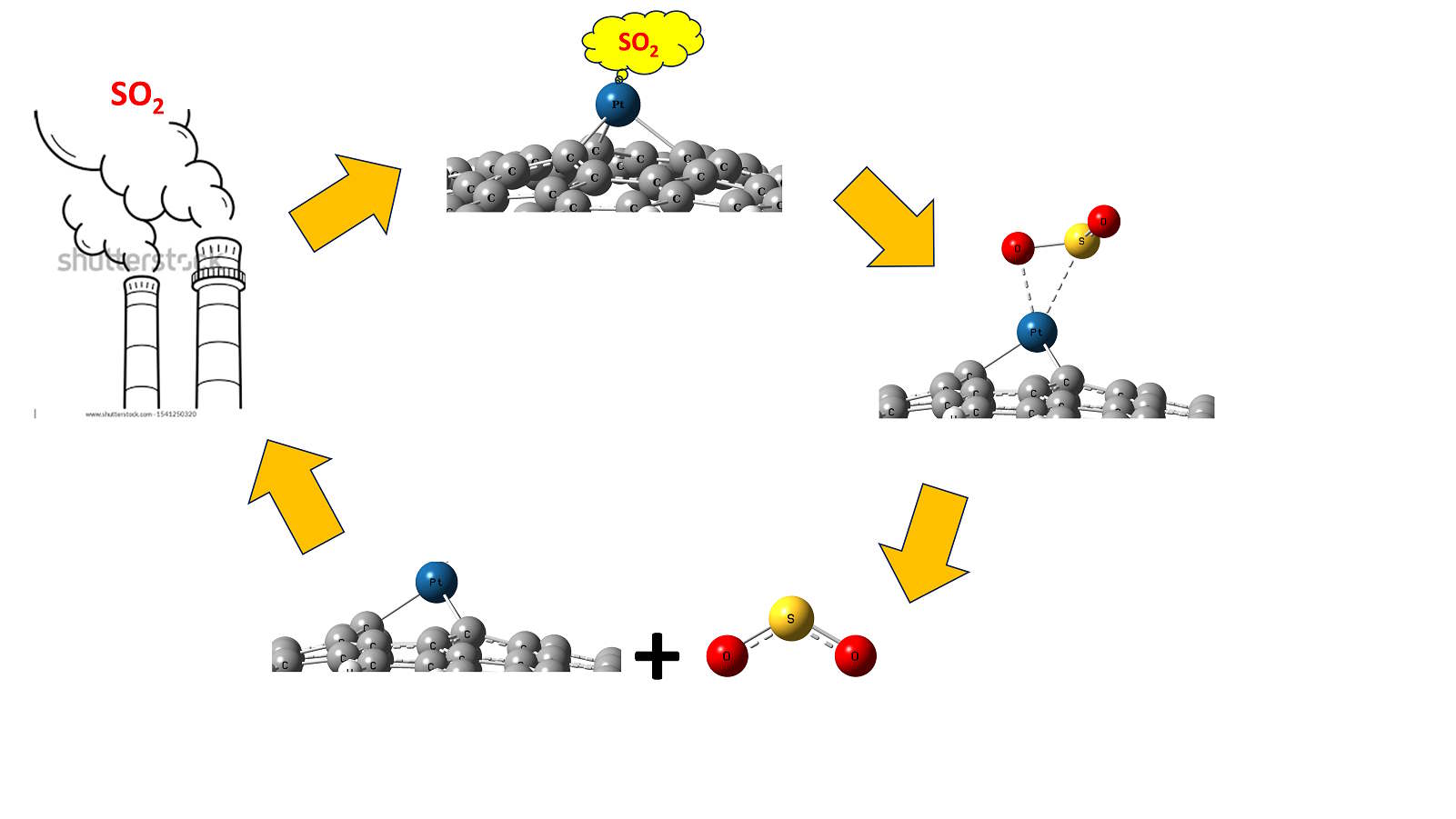
Hydrogen assisted SO2 dissociation on the Pt-doped graphene quantum dot surface: a non-periodic DFT study

Pages 178-186

https://doi.org/10.22034/crl.2024.489135.1476

Reza Behjatmanesh-Ardakani, Rovnag Rzayev

Abstract In the previous study, it was shown that Pt-doped graphene quantum dot catalyst is a suitable catalyst for the adsorption and desorption of SO2, with a moderate adsorption energy of approximately -1 eV (the negative sign indicates that the adsorption is an exothermic process). However, the catalyst was not suitable for the dissociation of SO2 due to the high barrier energy (> 2 eV). In this paper, it is shown that the barrier energy for the dissociation of SO2 can be reduced with the co-adsorption of H2. Hydrogen gas requires only 0.27 eV of energy on the catalyst surface to be dissociated. With the co-adsorption of atomic hydrogen, the first step barrier energy of SO2 dissociation is reduced from +2.24 eV to +1.17 eV, and the second step barrier energy is reduced from +2.18 eV to +1.11 eV. The data show that all elementary steps are exothermic. The reaction energy of SO2 dissociation to SO + O is equal to -0.1 eV, while the reaction energy of SO dissociation to S + O is equal to -0.48 eV. The transition state structure for the first step is more similar to the reactants, while the structure of the transition state for the second step is exactly in the middle of the reaction path. Backward barrier energies for the two elementary steps are equal to +1.27 and +1.59 eV which are greater than the forward barrier energies.

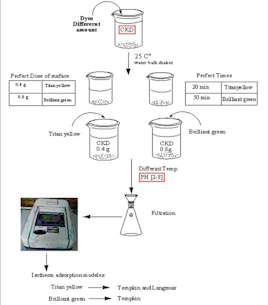
Study The Efficiency of Cement Kiln Dust Waste for Removal Some Dyes

Pages 187-198

https://doi.org/10.22034/crl.2025.479727.1443

Farah Jabbar Ali, Inam J Radhi, Hamida Idan Salman, Saad Aziz Hassan

Abstract Titan Yellow and Brilliant Green dyes were adsorbing to cement kiln dust (CKD) in this work by adjusting factors including contact time, dye concentration, adsorbent dose, pH, and different temperatures at (25, 35, 45, and 55 °C) and isotherms of adsorption. Freundlich, Langmuir, and Temkin adsorption isotherm equations were all examined. Between the Langmuir and Temkin isotherms, the equilibrium adsorption data were fitted Thermodynamic parameters ΔG, ΔH, and ΔS were calculated and the results indicated that the adsorption process on CKD was exothermic and non-spontaneous in Brilliant dye, but endothermic and spontaneous in Titan Yellow. It was also observed that adsorption was height at pH=2 for Titan dye and height at pH=8 for Brilliant dye.

Production and application of hydrogel and bigel based on soy protein isolate containing carboxymethyl cellulose/tragacanth and corn oil as an oil substitute in the formulation of low-fat mayonnaise

Pages 199-210

https://doi.org/10.22034/crl.2024.484219.1454

Omid Esmaeili, Forogh Mohtarami, Sajad Pirsa

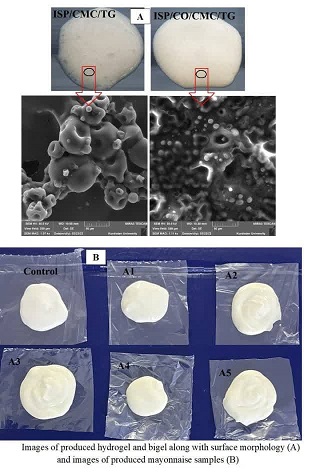
Abstract The main goal of this research was to produce hydrogel and bigel based on soy protein isolate (SPI) containing carboxymethyl cellulose/tragacanth (CMC/TG) and corn oil (CO) and its use as an oil substitute in the formulation of low-fat mayonnaise. Based on this, hydrogel and bigel produced at the level of 30, 60 and 90% replaced fat and 7 types of mayonnaise were prepared and their physicochemical properties were investigated. SEM images showed that the gel structure was uniform in the produced bigel, but the presence of corn oil emulsion inside the hydrogel composition was visible. Replacing fat with hydrogel and b-gel did not have a significant effect on acidity and pH. The increase of fat replacement with hydrogel and bigel increased 4 factors of viscosity, elastic modulus (G’), viscous modulus (G”) and hardness, and the increase of these 4 factors increased the strength of the product texture. The increase of hydrogel and bigel increased the stability and reduced the adhesiveness of the product. By increasing the replacement percentage of hydrogel and bigel in the mayonnaise sample, the amount of fat decreased, and the main goal of the research in the production of low-fat mayonnaise was achieved. The highest amount of peroxide was in the control sample without hydrogel and bigel. Bigel had a great effect on the reduction of water activity, so that the lowest water activity was related to the sample with 90% replacement of Bigel. Both hydrogel and bigel increased lightness. Considering the inherent color of mayonnaise, which is white, increasing its lightness is a desirable phenomenon. The general result is that the use of hydrogel and bigel in the preparation of low-fat mayonnaise can improve the chemical and physical stability of this product. In addition, this study showed that the use of hydrogel and bigel can be used as a stable oil substitute in the preparation of mayonnaise.