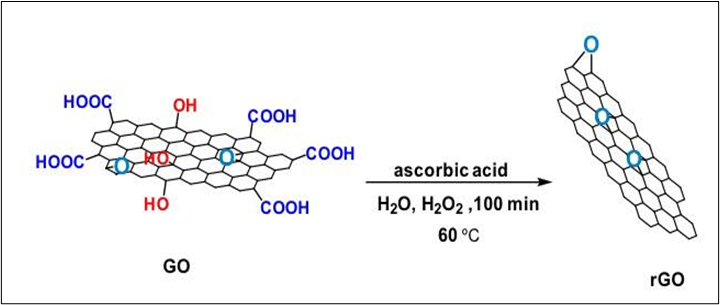
The aim of this work is to create reduced graphene oxide from graphene oxide synthesized by the Tour method and then reduce it using ascorbic acid. We used field emission scanning electron microscopy (FESEM), Fourier transform infrared (FTIR), and Raman spectroscopy to examine and measure the data. In the current study, we used RGO to adsorp and remove methyl orange dye (MO). We investigated the effects of pH and ionic density on the dye removal process, as well as the surface weight of the adsorbent and the length of time the dye remained in contact with RGO. We considered the temperature, isotherms, and adsorption kinetics and came to some final conclusions.
Hussein,Z. H, F. Karam,F. and Rahi Mashkur,N. (2025). Thermodynamic, kinetic studies and adsorption conditions for removal of dye from aqueous solution using Reduced Graphene Oxide (RGO).. Chemical Review and Letters, 8(1), 128-136. doi: 10.22034/crl.2024.479028.1421
MLA
Hussein,Z. H, , F. Karam,F. , and Rahi Mashkur,N. . "Thermodynamic, kinetic studies and adsorption conditions for removal of dye from aqueous solution using Reduced Graphene Oxide (RGO).", Chemical Review and Letters, 8, 1, 2025, 128-136. doi: 10.22034/crl.2024.479028.1421
HARVARD
Hussein Z. H, F. Karam F., Rahi Mashkur N. (2025). 'Thermodynamic, kinetic studies and adsorption conditions for removal of dye from aqueous solution using Reduced Graphene Oxide (RGO).', Chemical Review and Letters, 8(1), pp. 128-136. doi: 10.22034/crl.2024.479028.1421
CHICAGO
Z. H Hussein, F. F. Karam and N. Rahi Mashkur, "Thermodynamic, kinetic studies and adsorption conditions for removal of dye from aqueous solution using Reduced Graphene Oxide (RGO).," Chemical Review and Letters, 8 1 (2025): 128-136, doi: 10.22034/crl.2024.479028.1421
VANCOUVER
Hussein Z. H, F. Karam F., Rahi Mashkur N. Thermodynamic, kinetic studies and adsorption conditions for removal of dye from aqueous solution using Reduced Graphene Oxide (RGO).. Chem. Rev. Lett., 2025; 8(1): 128-136. doi: 10.22034/crl.2024.479028.1421