Volume & Issue: Volume 7, Issue 6, November and December 2024, Pages 912-1073 
Number of Articles: 15

Enhanced adsorption performance and efficiency of graphitic GaN monolayers through functionalizing with transition metal adatoms (Co, Cu and Ni): A DFT study

Pages 912-925

https://doi.org/10.22034/crl.2024.467458.1375

Zahraa Saba Ghnim, Ayat Husein Adthab, Morug Salih Mahdi, Aseel Salah Mansoor, Usama Kadem Radi, Nasr Saadoun Abd, Rebaz Obaid Kareem

Abstract In this work, we have accomplished first principles calculations to scan the geometrical and electronic behaviors of GaN substrates functionalized with transition metal (Co, Cu and Ni) adatoms. The adsorption capacity of the Ni-adsorbed GaN monolayers was also evaluated to take advantage of applying these improved nanosystems in gas sensor devices. Among these transition metal adatoms, the highest adsorption energy and geometrical stability belong to the Ni adsorption on the GaN monolayer. All the transition metals prefer the nitrogen site of GaN monolayer for adsorption. Besides, all the transition metal adsorbed GaN monolayers unveil semiconducting activities due to the band gap rise around the Fermi level. The charge densities were comprehensive between the transition metals and nitrogen atoms of GaN system, indicating the chemical reaction between them. Subsequently, the adsorption features of CO, NO and NO2 on the surface of pristine and Ni-adsorbed GaN were surveyed in detail. The results indicated that the gas molecules are sturdily chemisorbed on the Ni-adsorbed GaN. Therefore, Ni functionalization expressively enhanced the sensitivity of GaN monolayer for gas trapping. Our results highlighted that the Ni-adsorbed GaN monolayers will help to encourage scientists to develop improved 2D GaN-based sensor systems in the future.

3D-QSAR study on the DYRK1A inhibitors and design of new compounds by CoMFA and CoMSIA methods

Pages 926-941

https://doi.org/10.22034/crl.2024.474579.1410

Mohammad Sarfaraz Khalifehlou, Eslam Pourbasheer, Reza Mahmoudzadeh Laki, Mohammad Fadaeian

Abstract In recent years, drug design for specific diseases has been of great importance for researchers. In this study, 3D-QSAR modeling was used on a series of 1,5-naphthyridine derivatives in order to design new DYRK1A inhibitors as anti-diabetes. After dividing the data set to the training and test sets, the training set was used to generate statistically significant CoMFA (r2cv = 0.376, r2ncv = 0.980) and CoMSIA (r2cv = 0.365, r2ncv = 0.783) models based on the common substructure-based alignment. Furthermore, a set of 9 compounds was created for testing the ability of the CoMFA and CoMSIA models to accurately predict compound activity. Also, the application of the CoMFA focus model provided better results (r2cv = 0.566, r2ncv = 0.988). The design of new analogues based on naphthyridines as DYRK1A inhibitors was carried out using the knowledge obtained from the contours of the CoMFA focus model. Contours were used to identify structural features of this series of analogs that are related to biological activity. Six new designed compounds, in this group of substances, showed stronger DYRK1A inhibitory activity.

Spectroscopic analysis and theoretical comparison of the reactivity of 6-amino-3(R)benzophenone reactions with acetylacetone

Pages 942-956

https://doi.org/10.22034/crl.2024.463313.1356

Aamor Mouna, EL Ouafy Hayat, Halil Loubna, Boutkbout Nait Moudou Mouad, Reda Chriyaa Mohamed, Iken Walid, Naciri Soukaina, EL Ouafy Tarik

Abstract In this work, the reaction studied is a Friedlander synthesis that synthesizes the derivatives (C) 5-acetyl-9-chlorophenylquinoline and (C’) 5-acetylphenylquinoline. This is a condensation-cyclization reaction of 6-amino-3-(R)benzophenone (R=Cl and R=H) with acetylacetone in the existence of hydrochloric acid. This work used a density functional theory (DFT) B3LYP/6-311G (d,p) method to determine the chemical descriptors, the HOMO (Highest Occupied Molecular Orbital) and LUMO (Lowest Unoccupied Molecular Orbital) orbits,, and to express the structure and activity of quantitative relationships of 6-amino-3-(R)benzophenone derivatives with acetylacetone from the reaction. The molecular electrostatic potential (MEP) was used to determine the reactivity of 6-amino-3-(R)benzophenone and acetylacetone. The results obtained from theoretical studies and the structural parameters that were achieved with the theory level B3LYP/6-311G (d,p) were indicated with the experimental interpretations. 6-amino-3-(R)benzophenone (R=Cl and R=H) molecules are the most stable given by their best gap values and acetylacetone is the reactive molecule. We performed another theoretical study using quantum time-dependent density functional theory (TD-DFT) on the molecules to determine UV-Vis spectra and IR Infrared spectra. The Fukui functions can be defined using finite differences in electron density F_k^+ for nucleophilic and F_k^- electrophilic etching. The two Parr functions P_k^+ and P_k^- are obtained by Hirschfeld of the electrophilic and the nucleophilic molecule, respectively.

Micelle promoted synthesis of schiff base ligands derived from 4-methyl-1,2,3-thiadiazoles-5-carboxylic acid hydrazide in bio based green media

Pages 957-963

https://doi.org/10.22034/crl.2024.448451.1313

Vasant Bhagwan Jagrut, Amol Diliprao Kale, Gautam Prabhakar Sadawarte, Rajendra Prahalad Phase

Abstract The formation of Schiff bases are usually carried out using an acid or base catalyst in organic solvent, use Dean-Stark apparatus and dehydrating agents for removal of azotropic water. This article describes an efficient and eco-friendly synthesis of schiff base ligands, has been developed by the reaction of various benzaldehyde (1) with 4-methyl-1,2,3-thiadiazoles-5-carboxylic acid hydrazide (2) using SDS surfactant in aqueous bio based reaction medium, ethyl lactate: water. This method has more advantage as compare exiting methods such as clean reaction conditions, shorter reaction time, high yields, bio based, inexpensive and nonhazardous reaction medium with non-tedious workup. Herein synthesized compounds were characterized by various techniques such as FT-IR, 1HNMR, 13CNMR. Mass spectra and CHNS analyses.

Electronic and optical properties of 2D VFeSb: case study by DFT

Pages 964-971

https://doi.org/10.22034/crl.2024.455831.1333

Morug Salih Mahdi, Hiba Mushtaq, Dheyaa Flayih Hasan, Hala Bahir, Ameer Hassan Idan, Farnaz Behmagham

Abstract We propose the two-dimensional (2D) structure of VFeSb and investigate their structural, electronic and optical properties in the framework of first-principles calculations and density functional theory (DFT). By calculating the E-V curve, we found that VFeSb has mechanical stability. From the electronic point of view, this structure is a half metal, which has the integer magnetic moment, so it is a suitable candidate for use in spintronics applications. The dielectric function curve showed that the greatest response to the incident photon and electron transition occurs in the IR and visible light regions, which is suitable for use in optoelectronics. The refraction and extinction coefficients show that in the IR and visible light regions, the amplitude of electromagnetic waves is low, and the reflection coefficient is less than 40% in most energy regions and the V structure behaves transparently.

Synthesis of new schiff base compounds based on Tröger’s base contain thiadiazole amine and study antioxidant activity

Pages 972-980

https://doi.org/10.22034/crl.2024.472458.1398

Athraa Ghanem Obaid, Sadiq Abdul Hussain Karim, Nour Abd Alrazzak Abd Allatif

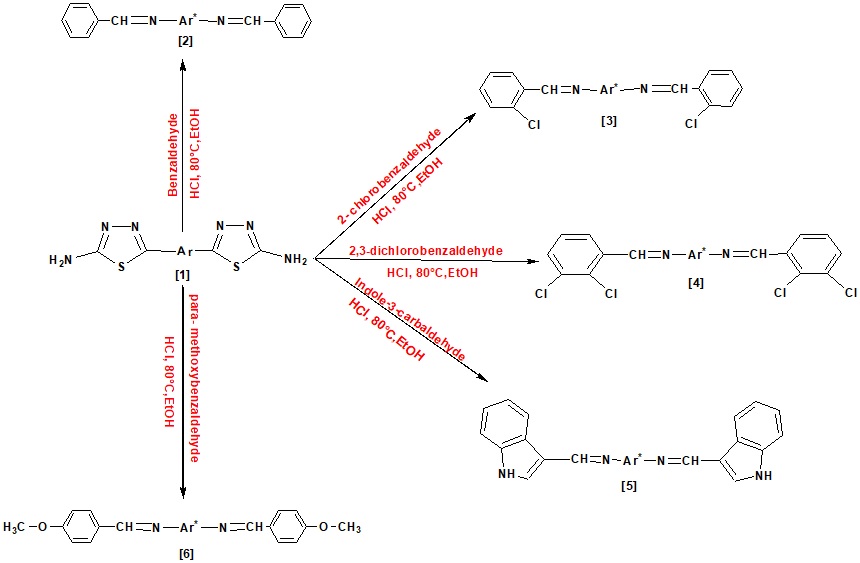
Abstract In this study to prepare a new thiadiazole derivatives, a series of new five-heterocyclic compounds membered containing Schiff bases 5,5'-(6H,12H)-5,11- Methanodibenzo [b,f] [1,5] diazocine-2,8-diyl)bis(1,3,4-thiadiazol-2-amine) were synthesized from reactions [Methanodibenzo [6H,12H]-5,11- [b,f] [1,5] diazosine-2,8-dicarboxylic acid] and thiosemicarbazide in the presence of phosphorus oxychloride, which react with different aldehyde to synthesis compounds. In addition, the physical properties of the previously prepared compounds were studied, including melting points, as well as the evaluation of antioxidant activity. The characterization of the compounds was evaluated using (FTIR), (¹HNMR), (¹³C-NMR), and Mass spectroscopy. The results were evaluated for all prepared compounds and showed a strong ability to eliminate DPPH free radicals, ranging between (69.05% - 77.42%) and at high concentrations (1 mg/ml), as the compounds manufactured in this way can serve as promising candidates that need more research. From development as antioxidant agents.

Recent advances in transition-metal-catalyzed dehydrative thioetherification of alcohols with thiols

Pages 981-992

https://doi.org/10.22034/crl.2024.472489.1399

Rovnag Rzayev, Ayten A. Niyazova, Nurlana K. Karimova, Adila E. Suleymanova

Abstract In this review, recent advances in transition-metal-catalyzed dehydrative thioetherification of alcohols with thiols are discussed. Mechanistic insights for the future development of novel and more efficient catalytic systems are given. The literature has been surveyed up until the end of July 2024.

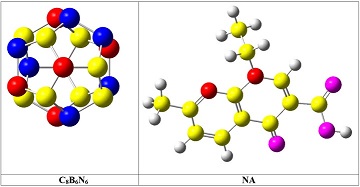
DFT Studies on the Nalidixic Acid Interactions with C8B6N6 Nanocluster

Pages 993-1000

https://doi.org/10.22034/crl.2024.478064.1418

Ali Behnia, Mohammad Reza Jalali Sarvestani, Azher Abdulmutaleb Ibrahim, Morug Salih Mahdi

Abstract The study examined the effectiveness of C8B6N6 nanoclusters in acting as both an adsorbent and sensor for removing and detecting nalidixic acid (NA) using density functional theory computations. The findings indicated that the interaction between NA and C8B6N6 is feasible, exothermic, and spontaneous, highlighting the potential of C8B6N6 as an efficient adsorbent for NA removal. The research also investigated the impact of water as the solvent and varying temperature on the thermodynamic parameters, revealing no significant influence on the interactions. Additionally, the Frontier Molecular Orbital (FMO) analysis revealed notable changes in the bandgap of C8B6N6 from 8.09 (eV) to 5.46 (eV) (-32.46%) during the adsorption process, suggesting its potential use as an effective electrocatalytic modifier for the electrochemical detection of NA. Other FMO parameters were also discussed in details. Overall, this study provides valuable insights into the potential use of C8B6N6 as an efficient adsorbent and sensor for the removal and detection of NA.

Reactive red 198 dye removal from textile wastewater by SBA-15 modified with cationic surfactant

Pages 1001-1009

https://doi.org/10.22034/crl.2024.447939.1310

Siavash Afrashteh

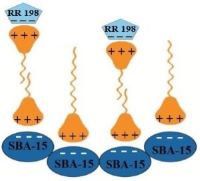
Abstract Highly sensitive, accurate and relatively fast technique has been utilized to remove reactive red 198 (R.R. 198) dye in textile wastewater, using synthesised nanocomposites. Determination of R.R. 198 dye was carried out by UV-Vis spectrophotometer at λmax= 515 nm. A SBA-15 mesoporous silica was synthesized then was functionalised using dodecyl trimethyl ammonium chloride (DOTAC) cationic surfactant. TEM, elemental analysis CHNS, TGA, FT-IR, and BET techniques were used to characterize the nanocomposites features. This research studies the impact of various parameters in removal of R.R. 198 dye by nanocomposite, like pH, quantity of nanocomposite, contact time, type of eluting solvent, and concentration of R.R. 198 dye was investigated. Experiments show that the new nanocomposite (DOTAC/SBA-15) is an excellent and powerful nanocomposite for removing the R.R. 198 dye from textile wastewater such as, Mazandaran textile factory, Qaemshahr sangtab textile factory, Amol babakan textile factory and Behshahr Acryltab factory with suitable fallouts.

Recent progress towards transition metal-catalyzed aniline–aldehyde–alkyne coupling for the synthesis of 2,4-disubstituted quinolines

Pages 1010-1022

https://doi.org/10.22034/crl.2024.476777.1416

Rafid Kamal Jameel, Morug Salih Mahdi, Aseel Salah Mansoor, Usama Kadem Radi, Ameer Hassan Idan, Hala Bahir

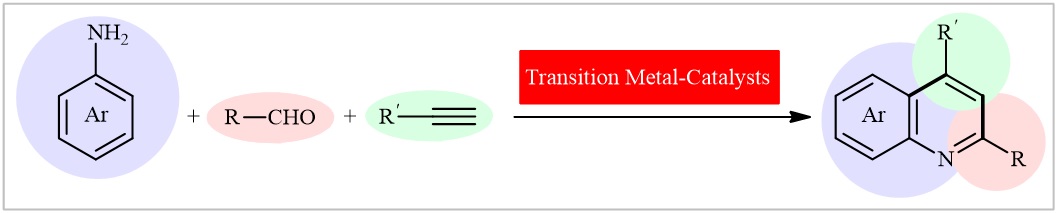
Abstract The present review describes the recent progress in the synthesis of 2,4-disubstituted quinolines through transition metal-catalyzed three-component coupling between aniline derivatives, aldehydes, and terminal alkynes. The review is organized according to the metal core of catalysts including Cu, Fe, Au, Ag, Al, Zn, rare earth metals and bimetallic catalysts. Therefore, this review would likely help on designing more efficient catalytic systems for the titled reaction.

Pd- and Pt-Doped Graphene Quantum Dots for SO2 Adsorption and Dissociation: A Non-periodic DFT Study

Pages 1022-1030

https://doi.org/10.22034/crl.2024.474971.1412

Reza Behjatmanesh-Ardakani, Rovnag Rzayev

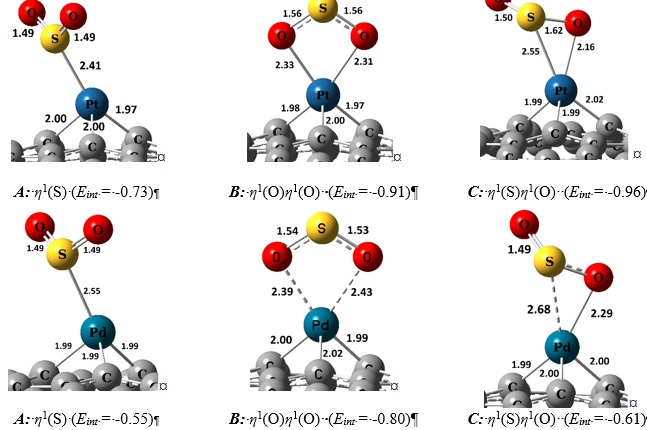
Abstract Commonly, transition metal catalysts such as Pt and Pd are used to adsorb and dissociate SO2 gas. Usually, SO2 adsorption energies on these metals are in the range of -1.0 to -1.5 eV, and the barrier energies are in the range of +0.5 to +1.0 eV. These small values of barrier energies cause that SO2 is readily converted to atomic sulfur, and the catalysts surfaces are poisoned by sulfur. In this paper, Pd- and Pt-doped graphene quantum dots are proposed as SO2 removal catalysts from flue gas emission. SO2 removal catalysts should have high barrier energy to prevent sulfur formation from SO2 dissociation, but have moderate SO2 adsorption energy to simply adsorb and desorb SO2. Using non-periodic density functional theory, the adsorption and dissociation of SO2 on Pd- and Pt-doped graphene quantum dots are investigated to test whether these catalysts are suitable for SO2 removal. The data show that the adsorption energies of SO2 on Pt- and Pd-doped graphene are in the range of -0.6 to -0.8 eV and -0.6 to -1.0 eV, respectively. However, their barrier energies are greater than +2.0 eV which is more than twice those on the transition metal surfaces. While these catalysts are good candidates for SO2 removal, they are not suitable for SO2 dissociation. The high barrier energies, contrary to the pristine transition metal surfaces, prevent the poisoning of the surfaces of the studied catalysts.

Synthsis, characterization and spectral estimation of Nickel(II), Copper (II) and their Complexes Activity as Antibacterial

Pages 1031-1041

https://doi.org/10.22034/crl.2024.474953.1411

Muhammed Naji Tawfeeq, Sattar Majeed, Eman Al Samarrai

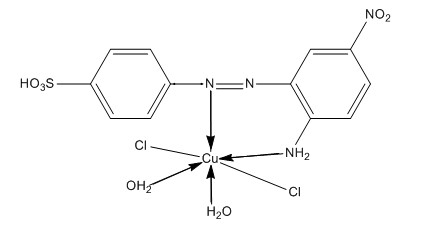
Abstract The study includes the synthesis and characterization of new azo compound 4-((2-amino-5-nitrophenyl)diazenyl)benzenesulfonic acid as reagent and their complexes with the two metals nickel (II) and copper (II). The complexes were prepared by mixing the azo ligand as a primary ligand and sodium pyrophosphate and malonic acid as secondary ligands using metal-ligand in a 1:1:1 mole ratio. Reagent and complexes were characterized by spectroscopic methods FTIR, UV-Visible, Atomic absorption, C.H.N and GC-Mass. The in-vitro biological activity of the ligand and the metal complexes were screened against the Gram-negative and Gram-positive pathogenic bacteria Serratia marcens and Pseudomonas aeruginosa.The copper complexes showed ahigh efficiency of antimicrobial activity compared with the ligand. Spectroscopic methods were developed to estimate nickel and copper, the best conditions was study which gave high sensitivity. It showed Linear range at 1-10 ppm with a correlation coefficient of (0.9901-0.9924). The detection limit was between (0.0715-0.0895) and the quantitative limit was between (0.2166-0.2713) ppm, the Sandel sensitivity was between (0.0166-0.0208) μg/cm2 and the Recovery% was (100.6177-101.4508).

Exploring Nitrogen Release from Urea Fertilizer Coated with Biodegradable Acetylated Lignin Sulfonate: A Numerical Analysis Using the Crank-Nicolson Method

Pages 1042-1052

https://doi.org/10.22034/crl.2024.453582.1325

Pouya Es'haghi, Hassan Seddighi, Keivan Shayesteh, Navid Omrani

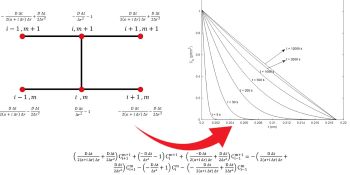
Abstract Soil alone cannot provide plants with all the vital nutrients they need. Chemical fertilizers are often used to supplement these nutrients but can introduce harmful contaminants. Fertilizers are coated to prevent wastage, cut costs, and minimize environmental pollution. Utilizing natural and biodegradable polymers is a highly viable option for coating fertilizers and producing slow-release fertilizers. These polymers, such as acetylated lignin sulfonate, offer an ideal solution owing to their natural abundance and efficient utilization. The system's behavior is comprehensively studied by modeling the nitrogen penetration process into the coating. The diffusion coefficient (D), concentration profile, and release rate are generally determined through modeling. Due to the thinness of the membrane, it is impossible to determine the concentration profile experimentally. Therefore, the total mass transferred through the membrane (Mt) is typically measured at specific intervals. The D, a parameter influencing Mt at specific times, is determined differently. This article aims to determine the concentration profile numerically using the Crank–Nicolson method for urea fertilizer coated with acetylated lignin sulfonate. Release charts are generated at various time points by solving Mt. Investigations indicate that at around 3000 seconds, the concentration profile becomes entirely linear and aligns with the concentration profile at 12000 seconds. Furthermore, beyond 3000 seconds, the stability of the concentration profile about time signifies a steady-state system. A comparative analysis between the experimental data and the numerical solution results demonstrates the high accuracy of the numerical solution, with the maximum relative error occurring at 7895 seconds.

Recent trends in direct O-mono-/di-/tri-fluoromethylation of carboxylic acids

Pages 1053-1062

https://doi.org/10.22034/crl.2024.487696.1472

Paresh chandra Sau, Fariz A. Amirli, Ganira Z. Jabbarova, Adila Y. Suleymanova, Mehriban H. Maharramova

Abstract This review highlights the most significant advances that were accomplished in the direct O-mono-/di-/tri-fluoromethylation of benzoic acid derivatives within the years 1965-2024. The overview is in the following order: (i) O-trifluoromethylation reactions; (ii) O-difluoromethylation reactions; and (iii) O-monofluoromethylation reactions.

Green synthesis of new spiropyrroloisatin and spiroindenopyrroles using biosynthesized CuO/ZnO@MWCNTs nanocatalyst

Pages 1063-1073

https://doi.org/10.22034/crl.2024.472507.1400

Zinatossadat Hossaini, Sajjad Ahmadi, Daryoush Zareyee, Somayeh Soleimani Amiri

Abstract The synthesis of novel, high-yield derivatives of spiropyrroloisatin was investigated in this work. CuO/ZnO@MWCNTs NCs was used as a nanocatalyst in a multicomponent reaction involving isatin, ammonium acetate, ethyl 2-arylamino-4-dioxo-4-arylbutanoates, hydrazonoyl chloride in room temperature at water to create these novel compounds. Using MCRs of ninhydrin, ammonium acetate, ethyl 2-arylamino-4-dioxo-4-arylbutanoates, hydrazonoyl chloride in the presence of CuO/ZnO@MWCNTs as nanocatalysts in room-temperature water, spiropyrroloisatin were synthesized under comparable conditions. The new synthesized spirocompounds exhibits antioxidant activity since its NH group has undergone two evaluation processes. Additionally, using two types of Gram-negative bacteria in a disk distribution procedure, the antibacterial activity of recently developed spirocompounds was evaluated, and these compounds also inhibited the growth of Gram-positive bacteria. This method's benefits include quick reaction times, large product yields, and straightforward catalyst and product separation through easy steps.