Volume & Issue: Volume 7, Issue 2, March and April 2024, Pages 148-372 
Number of Articles: 18

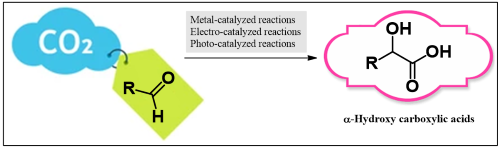
Recent investigations in synthesis of α-hydroxycarboxylic acids by reductive carboxylation of aldehydes with CO2 (microreview)

Pages 148-158

https://doi.org/10.22034/crl.2024.431476.1273

Ahmed Kareem Obaid Aldulaimi, Haider Radhi Saud, Mohammed Ubaid, Mustafa Humam Sami, Ayat Hussein Adhab, Farinaz Shahimi

Abstract Carbon dioxide (CO2) is a plentiful, nontoxic, nonflammable, renewable C1 feedstock and the major component of greenhouse gases, thereby the research for sustainable and efficient conversion of this waste gas into valuable chemicals has received great attention in recent years. The catalytic reaction between aldehydes and CO2 is a novel and attractive pathway for CO2-utilization as it can lead to the formation of highly important α-hydroxycarboxylic acids with ideal atom economy. This review discusses the advancements made within this research topic with the hope of promoting future research in the field of CO2-utilization.
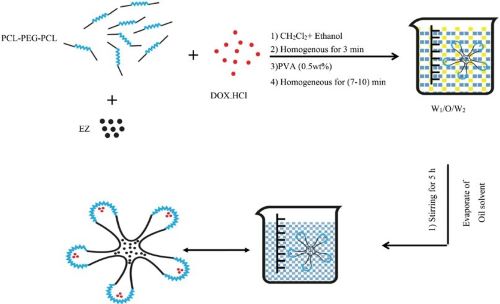
Preparation and in-vitro evaluation of PCL–PEG–PCL nanoparticles for doxorubicin-ezetimibe co-delivery against PC3 prostate cancer cell line

Pages 159-172

https://doi.org/10.22034/crl.2024.436907.1285

Mina Yousefnezhad, Mirzaagha Babazadeh, Soodabeh Davaran, Abolfazl Akbarzadeh, Hamidreza Pazoki-Toroudi

Abstract In the recent decade, the design and engineering of novel drug delivery systems based on biodegradable nanoparticles using biocompatible polymers like poly (ε-caprolactone)/poly(ethylene glycol)/poly(ε-caprolactone) triblock copolymer (PCEC) attracted many attentions. These nanocarriers have shown high potentials in enhancing treatment efficiency and minimizing the side effects of drugs. Besides, combination therapy has become a potential approach for cancer treatment with synergistic impacts. For the first time, we investigated co-delivery of the antitumor drug, doxorubicin (DOX), and ezetimibe (EZ) as a cholesterol uptake-blocking drug with PCEC on prostate cancer cell line (PC3). The PCEC was synthesized by ring-opening polymerization of ε-CL initiated by PEG2000. The obtained copolymer was characterized by Fourier transform infrared spectroscopy (FT-IR), proton nuclear magnetic resonance (1H-NMR) spectroscopy, and gel permeation chromatography (GPC). In this study, DOX and EZ were encapsulated within PCEC by double and simple emulsion techniques, which led to the preparation of DOX@PCEC, EZ@PCEC, and DOX+EZ@PCEC nanoparticles. The size and morphology of the developed nanoparticles were analyzed by field emission scanning electron microscopy (FE-SEM). Also, the particle size and zeta potential of the drug-loaded PCEC nanoparticles were determined by dynamic light scattering (DLS) analysis . The release behavior of DOX and EZ from nanoparticles at two pH values and temperatures was evaluated. The cytotoxicity of nanoparticles was demonstrated by MTT assay using PC3 prostate cancer cell line. Based on the MTT assay results, PCEC copolymer exhibited negligible cytotoxicity on the growth of the PC3 cell line. Therefore, PCEC is a biocompatible and suitable nano-vehicle for this study. Moreover, the cytotoxic activity of all formulations was dose-dependent. The cytotoxic effect of DOX+EZ@PCEC nanoparticles against PC3 cell line was higher than single drug@PCEC nanoparticles. All data confirmed that the EZ as a cholesterol-lowering drug showed a synergistic effect in combination with DOX as an anticancer drug. Finally, the results showed a successful formulation of DOX+EZ@PCEC nanoparticles with high efficiency in prostate cancer treatment.

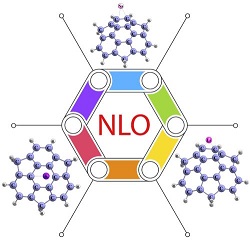
Theoretical Study on the Enhancement of Nonlinear Optical and Electronic Responses of Sumanene through Interaction with Alkali Metals (Li, Na, and K)

Pages 173-184

https://doi.org/10.22034/crl.2024.392027.1219

Saeedeh Kamalinahad, Haider Radhi Saud, Hala Bashir, Talal Aziz Qassem, Hayder Tariq

Abstract Sumanene molecule with highly symmetric (C3V) is polycyclic aromatic hydrocarbons. In this work, we report a quantum chemical calculation on the considered complexes, which were obtained by sumanene decorated with alkali metals (Li, Na, and K). Interestingly, the adsorption alkali metals by sumanene molecule lead to reduction Eg gap because of high energy levels which are formed under influence of interactions with alkali metals. The results indicate that the effect of alkali metals adsorption by sumanene is to greatly increase the β0 value. Among the obtained complexes, the largest first hyperpolarizability (β0) of the sumanene@Na and sumanene@K complexes were 2336323 au and 2904321 au, respectively.

Investigation of the antibacterial activity of phytosynthesized ZnO nanoparticles using H. perforatum extract

Pages 185-200

https://doi.org/10.22034/crl.2024.435875.1281

Roya Moeinzadeh, Malak Hekmati, Najmedin Azizi, Mahnaz Qomi, Davoud Esmaeili

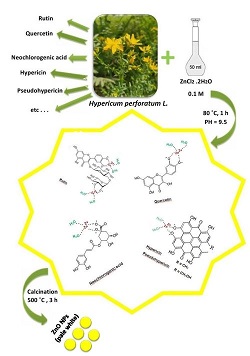
Abstract In this work, a facile and fast phytosynthesis of zinc oxide nanoparticles (ZnO NPs) were reported employing an aqueous extracts of flowering shoot tips of Hypericum perforatum L. (H. perforatum). UV-Vis Diffuse reflectance spectroscopy (UV-Vis DRS), X-ray Diffraaction (XRD), Field emission scanning electron microscopy (FESEM), Transmission electron microscopy (TEM), Energy dispersive X-ray spectroscopy (EDS) and Fourier transform infrared spectroscopy (FT-IR) were applied to characterize the fabrication of ZnO NPs. TEM results show a semi-spherical shape and a size range of 14 nm for synthesized ZnO Nps and also represented UV-Vis absorption at 365 nm. The antibacterial activity of phytosynthesized ZnO NPs and the aqueous extract of H. perforatum were also measured including: zone of inhibition, Minimum inhibitory concentration (MIC) and Minimum bactericidal concentration (MBC). The bacteria examined in this study are Methicillin-resistant Staphylococcus aureus (MRSA), Pseudomonas aeruginosa (both of which are the most common causes of nosocomial infections), and Bacillus subtilis. Regarding the antibacterial properties of the synthetic samples, the best results were obtained with H.perforatum/ZnO NPs against B. subtilis. as follows: inhibition zone diameter at 1000 μg mL-1, 18 mm, MIC and MBC values of 39.06 μg mL-1 and 78.12 μg mL-1. Considering the favorable antibacterial activity of synthesized ZnO NPs using H. perforatum extract, they can be applied in bio-medicinal applications, particularly as nanobiotics.

Thioindole adsorption as a biologically active anticancer over C20 fullerene in different reaction media using density functional theory

Pages 201-210

https://doi.org/10.22034/crl.2024.436695.1284

Marziyeh Mohammadi, Fahimeh Alirezapour

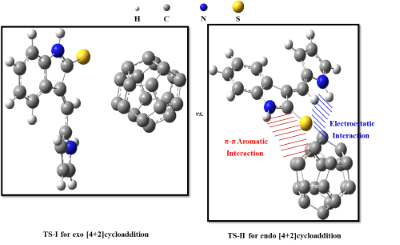
Abstract The adsorption of the pyrrole-thioindole (1) and C20 cage (2) are studied at B3LYP/6-311+G*, B3LYP/6-311++G** and B3LYP/AUG-cc-pVTZ. Stability of solute and complex (3) depends on the dielectric constant of the used solvent (ε), the possibility of the hydrogen bonding (H…B) and dipolar–dipolar interaction (D.-D.I.) between them. In going from the gas phase to less polar solvent, then in turn to more polar solvent, a good consistency appears between ε and the absolute value of adsorption energy difference among solvent phase and gas phase i.e. │∆Eads. of s-g│ obtained for product (3). Moreover, the highest │∆Eads. of s-g│ is measured for (3) in water, whereas the lowest value is associated in cyclohexane. Because of capability of (H…B), (3) is stabilized in the most polar solvent (water) more than gas phase and other solvents. The kinetic stability and energy difference between the frontier orbitals (Eg or ∆EL-H) is observed in the opposite direction with ε. A red shift is monitored when adsorption is taken in polar solvents as ∆EL-H is reduced.

Bis[(2-ethoxy-2-oxoethyl)triphenyl phosphonium] di-µ-chloro-bis[bromochloro palladate (II)] and its application in Heck and Suzuki cross-coupling reactions

Pages 211-221

https://doi.org/10.22034/crl.2024.434691.1276

Ali Naghipour, Abozar Bastami, Ali khatibjoo, Fatahnia Farshid

Abstract In this study, the phosphonium salt [Ph3PCHC(O)OCH2CH3]Br undergoes a reaction with palladium(II) chloride, resulting in the formation of [Ph3PCHC(O)OCH2CH3]2[Pd2Cl4Br2]. The synthesized compound underwent thorough characterization through elemental analysis, as well as FT-IR, 1H, 31P, and 13C NMR spectroscopies. The investigation revealed that this particular substance serves as an efficient catalyst for the Heck cross-coupling reaction, leading to the synthesis of diverse unsaturated products with highly favorable outcomes. Moreover, it has demonstrated effectiveness in catalyzing the Suzuki cross-coupling reaction. Notably, the catalyst exhibits sustained catalytic activity and can be conveniently recovered and reused.

Green preparation and theoretical study of novel pyrimidothiazines and pyrimidooxazines using Ag/Fe3O4/SiO2@MWCNTs MNCs as efficient catalyst

Pages 222-240

https://doi.org/10.22034/crl.2024.436566.1283

Atena Naeimi, Mahboubeh Ghasemian Dazmiri, Maryam Ghazvini

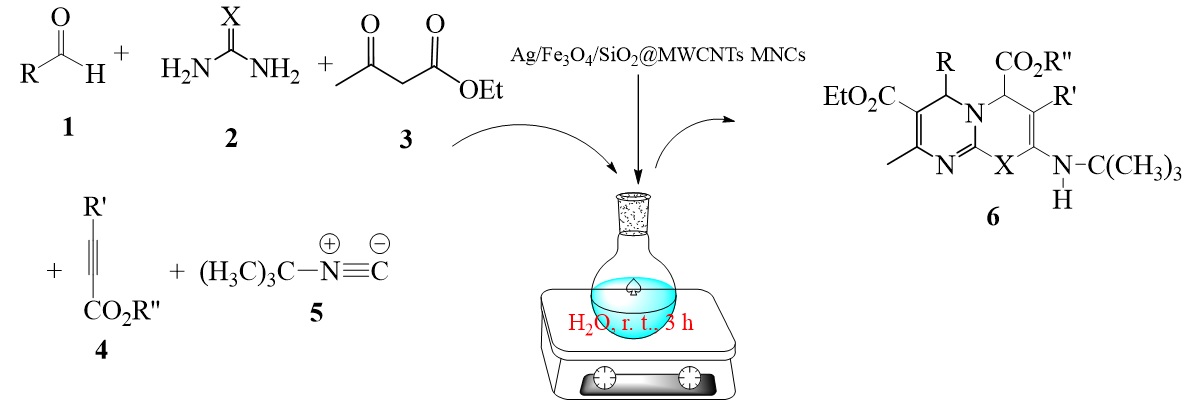
Abstract The development of Ag/Fe3O4/SiO2@MWCNTs MNCs magnetic nanocomposites was done with the goal of producing novel pyrimidothiazines and pyrimidooxazines in high yields. These novel compounds were created utilizing a multicomponent reaction in aqueous media that included aldehydes, ethyl acetoacetate, urea or thiourea, electron-deficient acetylenic chemicals, and tert-butyl isocyanide. It should be noted that Petasits hybridus leaf water extract was used in these processes repeatedly to demonstrate the reusability of the nanocatalyst and was used to create the high performance nanocatalyst. The NH group, which was assessed by two processes, is what gives recently synthesized pyrimidothiazines and pyrimidooxazines their antioxidant properties. Additionally, the antibacterial activity of newly created pyrimidothiazines and pyrimidooxazines was assessed using a disk distribution procedure with two different types of Gram-negative bacteria and Gram-positive bacteria, demonstrating that using these compounds prevented the growth of bacteria. This method is used to make pyrimidothiazines and pyrimidooxazines derivatives, and it offers advantages including quick reactions, high yields for the finished products, and the ability to separate catalyst and products with ease.

Chemical Fixation of CO2 with 2-Aminobenzenethiols into Benzothiazol(on)es: A Review of Recent Updates

Pages 241-252

https://doi.org/10.22034/crl.2024.443045.1296

Ahmed Kareem Obaid Aldulaimi Obaid Aldulaimi, Ayat Hussein Adhab, Haider Radhi Saud, Mohammed Ubaid, Mustafa Humam Sami

Abstract This paper presents an update review on recent advances and developments in chemical fixation of CO2 with 2-aminobenzenethiols into benzothiazol(on)es. For clarity, the review is divided into two main sections. The first section is a discussion of the synthesis of benzothiazole derivatives via cyclization of 2-aminobenzenethiols with CO2, while the second consists of an overview of cyclocarbonylation of 2-aminobenzenethiols utilizing CO2 for the synthesis of benzothiazolone derivatives.

Stepwise removal of Lignin sulfonate hydroxyl ion to reduce its solubility in an aqueous environment: As a Coating in slow-release systems or absorbent base

Pages 253-262

https://doi.org/10.22034/crl.2024.440951.1292

Keivan Shayesteh, Ghasem Mohammadzadeh

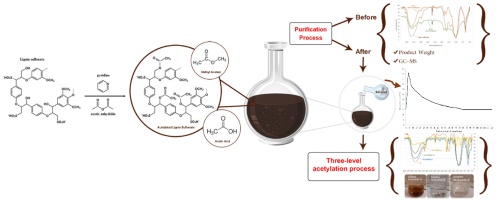
Abstract The presence of functional groups in the structure of lignin increases its ability to make changes and carry out chemical reactions, and this work strengthens its commercial applications. The main goal of this research is to reduce the solubility of lignin-sulfonate using the acetylation process, especially multi-stage acetylation, to improve its ability. For this purpose, reducing or removing the hydroxyl groups is necessary. In this research, Lignin sulfonate was extracted from the wastewater of Mazandaran wood and paper factory. Then, the decrease in the solubility of Lignin sulfonate was studied by performing the acetylation reaction of Lignin sulfonate in a multi-stage manner. From FT-IR, GC-MS, SEM, XRD, and Contact Angle analyses, the effect of stepwise acetylation on the structure of Lignin sulfonate bio-polymer was studied. The results showed that the hydroxyl groups were significantly reduced in the multi-stage acetylation process of Lignin sulfonate, which significantly reduced the solubility and hydrophilicity of the product compared to the raw material. The solubility, weight of the product, GC-MS analysis, and FT-IR analysis of the solution showed the necessity of choosing the ethanol solvent in the purification of the product. Thus, by improving the crystallization process of the product, the amount of acetylated Lignin sulfonate produced increased significantly. This research tried to provide a suitable analysis for the severe exothermic reaction of ethanol to purify impurities and improve the quality and quantity of acetylated lignin sulfonate products.

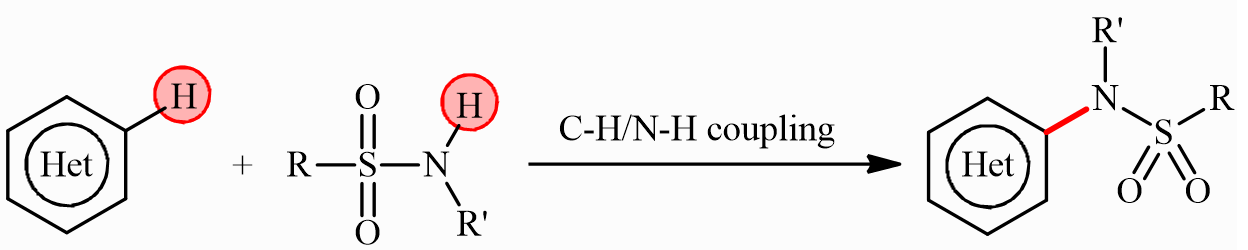
Recent progress in cross-dehydrogenative sulfonamidation of (hetero)arenes

Pages 263-276

https://doi.org/10.22034/crl.2024.446350.1302

Khaitov Jonibek Kurbonovich, Todjiyev Jamoliddin Nasiriddinovich, Nematov Khusan Ibodullayevich, Jurayeva Mukhlisa Ilhom Qizi, Muhammedova Busora Muhammedova, Bekjanov Ikrom Qurvonnazarovich, Khaydar Ergashovich Yunusov

Abstract This review focuses on the contributions made in the direct C-H amidation of (hetero)arenes with sulfonamides. The manuscript is divided into two parts based on C-H components. The first part includes cross-dehydrogenative sulfonamidation of simple arenes while the second section contains the examples of the direct sulfonamidation of heteroaromatic compounds.

Density, viscosity, and speed of sound of carbitol + 2-propanol + water mixtures at various temperatures: Measurement and mathematical modeling

Pages 277-285

https://doi.org/10.22034/crl.2024.430937.1274

Amirmohammad Sharafi, Aliasghar Hamidi, Elaheh Rahimpour, Abolghasem Jouyban, Mohammadreaza Behboudi

Abstract Physicochemical properties data of solvent mixtures is an integral part of ‎designing new industrial processes, developing theoretical models and etc. In this work, physicochemical properties of ternary mixtures of carbitol with water and 2-propanol including density, viscosity, and speed of sound in the entire range of compositions and temperatures including 298.15, 303.15, 308.15, and 313.15 K and atmospheric pressure of 0.868 MPa were carried out and compared with the available literature data. Jouyban–Acree and the Jouyban-Acree-van’t Hoff models were used for mathematical correlation of the obtained records. The mean relative deviation (MRD%) was used as an error scale. The related MRDs% for the predicted properties after training the Jouyban-Acree model were 0.2%, 5.9%, and 0.3%, and the Jouyban-Acree-van’t Hoff model were 0.2%, 6.0%, and 0.3% for density, viscosity, and speed of sound, respectively.

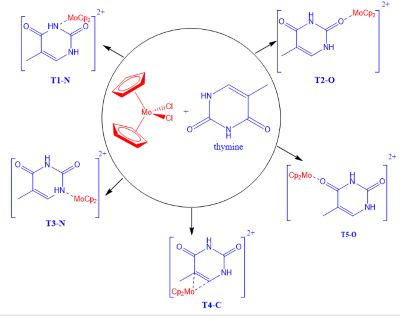
Binding of thymine and Molybdenocene dichloride anticancer agent: A DFT investigation

Pages 286-293

https://doi.org/10.22034/crl.2024.441452.1294

Maryam Azari, Reza Ghiasi, Behrooz Mirza

Abstract This study investigated the reaction of molybdenocene dichloride complex (Cp2MoCl2) as anticancer agent with thymine using mPW1PW91 functional. Five possible modes of the binding of thymine to MoCp22+ were considered. Energetic stability of five isomers was compared in gas and aqueous phases. Also, the solvent effect on the dipole moment values of systems was illustrated. The solvent effect on these data were examined using conductor polarizable continuum model (C-PCM). Energy decomposition analysis (EDA), Interaction region indicator (IRI) and Quantum theory of atoms in molecules (QTAIM) analysis provided deep insights into the nature and the strength of the Molybdenocene–thymine binding. Charge decomposition analysis (CDA) was used to illustrate the transfer of charge between two fragments.

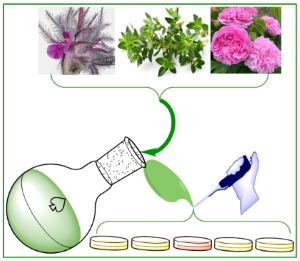
Assessing the combination of three plant species: Thyme (Thymus vulgaris), Damask Rose (Rosa damascena), and Stachys lavandulifolia vahl, to determine their synergistic effects on antimicrobial properties

Pages 294-310

https://doi.org/10.22034/crl.2024.437005.1286

Soma Majedi, Ali Omar Yassen, Sanaa Yaseen Issa

Abstract Plants, through their metabolic processes, produce phytochemicals commonly consumed in traditional medicine and nutrition for their potential health benefits. This study explores the biological and pharmacological evaluation of three distinct plant species: Stachys lavandulifolia vahl (mountain tea), Thyme (Thymus vulgaris), and Damask Rose (Rosa damascena). The primary focus is on assessing the synergistic effects of combining these plants and determining their impact on antimicrobial properties. The chemical structures of active compounds derived from these plants are presented, with a detailed classification based on their properties. The extract in our study showed strong antimicrobial activity against multiple microorganisms particularly S. epidermidis and E. coli with the inhibition zone 51 and 50 mm respectively. This analysis provides valuable insights into the potential therapeutic applications of these plants and their active compounds, thereby contributing to an enhanced understanding of their medicinal properties.

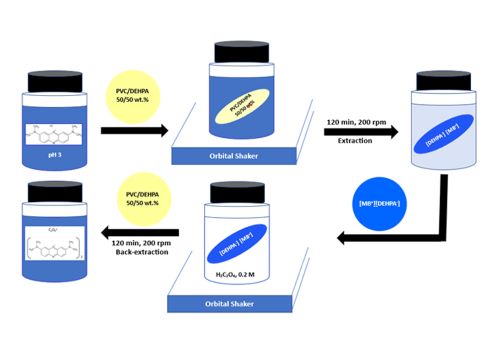
Methylene blue elimination from contaminated water solutions using a polyvinyl chloride based polymer inclusion membrane containing bis(2-ethylhexyl)phosphoric Acid

Pages 311-324

https://doi.org/10.22034/crl.2024.437064.1287

Sara Hadadian, Leila Dolatyari, Bahman Farajmand, Mohammad Reza Yaftian

Abstract Organic dyes such as methylene blue (MB) are known as important water and environment pollutants. Several techniques have been employed for removing this dye from contaminated aqueous solutions. In this study, polymer inclusion membranes composed of polyvinyl chloride (PVC) and bis(2-ethylhexyl)phosphoric acid (DEHPA), respectively as the base polymer and extractant, without requiring to additional plasticizing reagent are prepared and assessed for the removal of methylene blue from aqueous solutions. The membrane with a composition of 50 wt.% of PVC and 50 wt.% of DEHPA is found to be flexible, physically stable. This PIM shows the best performance for the MB elimination from the solutions. Various techniques including Fourier transform infrared spectroscopy (FT-IR), scanning electron microscopy SEM), atomic force microscopy (AFM), contact angle measurements, thermogravimetric analysis (TGA), and stress-strain analysis are employed for characterizing the optimized PIM. The parameters affecting the removal of MB from the solutions are optimized. It is found that a circular disc PIM with 3.5 cm diameter, an average mass of 0.0890±0.0046 g, with a thickness of 72.0±0.8 m removes quantitatively MB from 50 mL aqueous solution adjusted to pH 3, after 120 min orbital shaking. The PIM is stable for 6 times consecutive cycles. The kinetics of process is obeyed pseudo second-order model, while the Langmuir model interpret well the isotherm of the MB removal.

A novel method for nanocrystallization of nanostructured materials for radiation exposure measurements

Pages 325-332

https://doi.org/10.22034/crl.2024.446784.1304

Kaivalya Gupta, Gayatri Verma, Ratnesh Tiwari, Amit Kumar Beliya, Sujit Kumar Shende

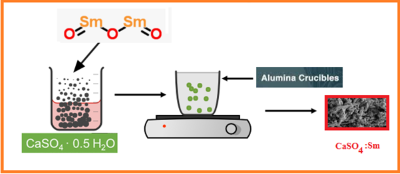
Abstract Nanocrystallization processes of inorganic and biological materials yield a wide range of electrical, optical, and structural properties. This process focuses specifically on the potential of certain elements as fluorophores and unique host materials. These elements have unique properties, especially luminescence, which depends on their size. It occurs when impurities are added to the framework that limit quantum effects. The results of innovative research on the thermoluminescence (TL) properties of nanostructured materials are very promising. In this work, we aim to create high-performance materials to improve radiation exposure measurement instruments. In this paper, we report on the thermoluminescent properties of self-agglomerated CaSO4:Samarium (Sm) samples prepared using an environmentally friendly coprecipitation method. Unlike conventional techniques, no additional binder is required to create solid CaSO4:Sm samples. When subjected to beta particle irradiation, these materials exhibit peak TL intensity at 490 K at a heating rate of 4.8 K/s. It exhibits twice the sensitivity of the TLD-100 dosimeter already on the market. Additionally, the minimum detection level for these samples was found to be less than 0.71mGy.The investigation shows that computerized glow curve decomposition, as part of the residual emission curve fitting approach created by McKeever, shows that the emission curve is composed of four separate TL peaks exhibiting intermediate-order motion.

Transition metal-catalyzed carbonylative coupling of aryl/alkyl halides with thiols: A straightforward synthesis of thioester derivatives

Pages 333-345

https://doi.org/10.22034/crl.2024.448261.1311

Jonibek Khayitov, Yuldashev Tashmurza Rakhmonovich, Buronov Firdavsiy Eshburiyevich, Ismailov Boburbek Mahmudjanovic, Rakhimov Khusniddin Nurboboyevich, Utkir Bobomuradov Ziyadullayevich, Avlayarova Nargiza Maxmudovna, Khaydar E. Yunusov

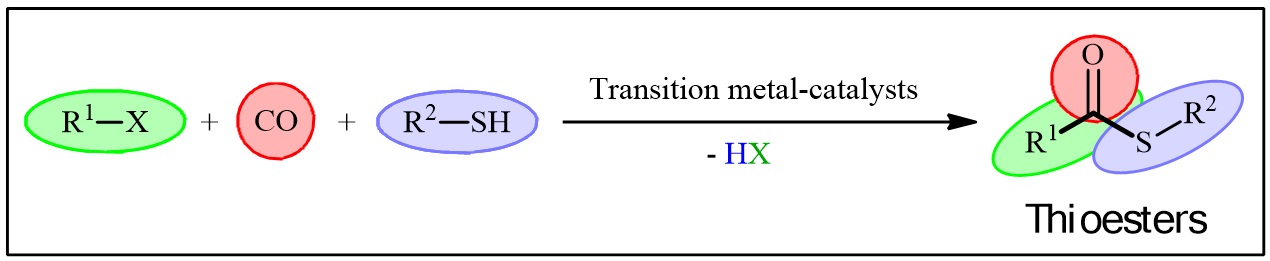
Abstract Abstract: Thioesters are a class of highly useful compounds in synthetic chemistry, and many thioester compounds show biological and pharmacological activities. Organic halides and thiols are widely accessible chemical feedstocks and are widely used in industry as building blocks. The synthesis of thioesters from these basic chemicals is important for chemical synthesis nowadays. Over the years, many efforts have been made to access thioester derivatives through thiocarbonylation of organic halides with thiols using different carbon monoxide sources including CO, CO2, COgen, [CpFe(CO)2]2, Cr(CO)6, etc. Herein, we summarize the recent advances of these carbonylative coupling reactions.

Materials alternative recommender using machine learning based on COSMO-SAC

Pages 346-358

https://doi.org/10.22034/crl.2024.447155.1305

Ameer Hassan Idan, Mustafa Humam Sami, Nahed Mahmood Ahmed Alsultany, Mohammed Ubaid, Rebaz Obaid kareem

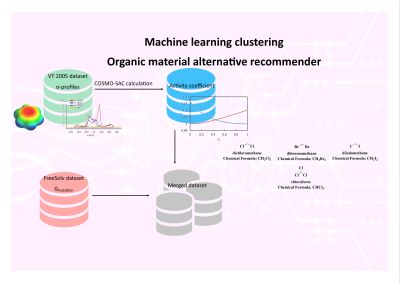
Abstract Finding alternative materials and solvents in a chemistry lab or the process of designing would be a time-consuming matter. The activity coefficient is one of the most important thermodynamic properties that could be used for this purpose. COSMO-SAC modeling is a reliable method to determine the activity coefficient of the mixtures and is used to find alternatives to the organic materials in the present study. A dataset of 96 organic molecules’ activity coefficients in the different solvents (water, ethanol, methanol, toluene, and benzene) mixtures have been obtained in full range composition with COSMO-SAC. The created database has been merged with the FreeSolv dataset to extend the diversity of the properties to enrich the dataset for machine learning training. Unsupervised machine learning methods (clustering) including centroid-based and density-based clustering methods have been conducted to introduce the best alternatives for the studied 96 organic materials. Proper pre-processing for these methods has been utilized to evaluate the optimum parameters of the clustering methods including the elbow method for centroid-based clustering and k-nearest neighbors for the density-based clustering. The centroid-based clustering methods recommend a different variety of materials based on the cluster numbers and sorting the alternatives based on the nearest properties. However, the density-based method works with the optimum distance and the number of the k-nearest neighbors that were 0.08 and 7, respectively for the created dataset. Its results are exclusive and show that the clustering could be used to isolate the clusters based on the chemical families which were 5 clusters and 12 out layers. The out layers are important since no alternatives have been introduced for them in the trained dataset and should be considered as unique materials. The density-based clustering results were more promising using COSMO-SAC data for organic materials alternative recommender.

Comprehensive analysis of phytochemistry, In Silico toxicity prediction, and antimicrobial efficacy across different fractions of Ammi visnaga L.

Pages 359-372

https://doi.org/10.22034/crl.2024.429586.1267

Zineb El Jabboury, Smail Aazza, Driss OUSAAID, Laila Lahrizi, Fatima El Kamari, Meryem Benjelloun, Lahsen El Ghadraoui

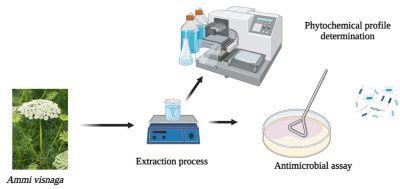
Abstract Ammi visnaga L. is a dense source of bioactive compounds with potential antioxidant and antibacterial activities. Different fractions were prepared to determine their total phenolic content and antioxidant activities (TPC, TFC, TAC, and DPPH). While, agar disc diffusion, MIC, and MBC assays were used to examine the antimicrobial effects of different fractions. The phytochemistry of the umbel dry was performed using UHPLC. Aqueous extract registered the highest amounts of TPC, TAC, TFC, and DPPH compared to other extracts (P<0.05). Treatment of antimicrobial results against three bacterial strains (E. coli, P. aeruginosa, and S aureus) and Candida albicans revealed that the aqueous extract exerted interesting activity against all microbes with diameter zones varying from 12 to 17 mm for bacteria and 25 mm for Candida albicans, while the hexane fraction registered the lowest antimicrobial activity against all microbes under study. The umbel contains 16 phenolic compounds whose majority components are isorhamnetin_3-O-rutinoside (50.18%), isorhamnetin_3-O-glucoside (19.35%) and kaempferol_3-O-glucoside (12.04%). Additionally, the in-silico toxicity prediction showed that the main phytochemicals did not possess any toxicity, including hepatotoxicity, carcinogenicity, mutagenicity, and cytotoxicity. The present findings indicate the possible application of Ammi visnaga L. as a useful antimicrobial agent that replaces chemical drugs that induce the emergence of resistance.