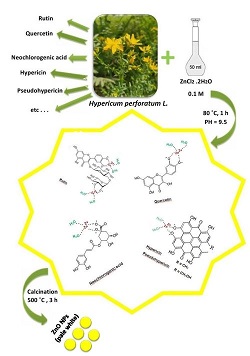
[1] K.V. Dhandapani, D. Anbumani, A.D. Gandhi, P. Annamalai, B.S. Muthuvenkatachalam, P. Kavitha and B. Ranganathan, Green route for the synthesis of zinc oxide nanoparticles from Melia azedarach leaf extract and evaluation of their antioxidant and antibacterial activities. Biocatal. Agric. Biotechnol., 24 (2020) 101517.
[2] S. Ahmed, S. A. Chaudhry and S. Ikram, A review on biogenic synthesis of ZnO nanoparticles using plant extracts and microbes: a prospect towards green chemistry. J. Photochem. Photobiol. B: Biol., 166 (2017) 272–284.
[3] K.E. Yunusov, A.A. Atakhanov, N.S. Ashurov, A.A. Sarymsakov and S.S. Rashidova, Physicochemical studies of cotton cellulose and its derivatives containing silver nanoparticles. Chem. Nat. Compd., 47 (2011) 415-418.
[4] M.S. Chavali and M.P. Nikolova, Metal oxide nanoparticles and their applications in nanotechnology. SN Appl. Sci., 1(2019) 607.
[5] A. Cartwright, K. Jackson, C. Morgan, A. Anderson and D.W. Britt, A review of metal and metal-oxide nanoparticle coating technologies to inhibit agglomeration and increase bioactivity for agricultural applications. Agron., 10 (2020)1018.
[6] Ü. Özgür, Y.I. Alivov, C. Liu, A. Teke, M.A. Reshchikov, S. Doğan, V. Avrutin, S. J. Cho and Morkoç, A comprehensive review of ZnO materials and devices. J. Appl. Phys., 98 (2005) 041301.
[7] M.A. Borysiewicz, ZnO as a functional material, a review. Crystals., 9 (2019) 505.
[8] G. Lavanya, T. Suvarna and C. Vardhani, Structural and Optical Properties of (MgZnO/rGO) Nanocomposites. J. Chem. Lett., 4 (2023) 136-147.
[9] M. Thirumavalavan, K. L. Huang and J.F. Lee, Preparation and morphology studies of nano zinc oxide obtained using native and modified chitosans. Materials., 6 (2013) 4198-4212.
[10] H. Agarwal, S.V. Kumar and S. Rajeshkumar, A review on green synthesis of zinc oxide nanoparticles–An eco-friendly approach. Resour -Effic Technol., 3 (2017) 406-413.
[11] A. Król, P. Pomastowski, K. Rafińska, V. Railean-Plugaru and B. Buszewski, Zinc oxide nanoparticles: Synthesis, antiseptic activity and toxicity mechanism. Adv. Colloid. Interface Sci., 249 (2017) 37-52.
[12] K. Parveen, V. Banse and L. Ledwani, Green synthesis of nanoparticles: their advantages and disadvantages. In AIP conference proceedings. in: AIP conference proceedings, AIP Publishing LLC., 1724 (2016) 020048.
[13] O.V. Kharissova, H.R. Dias, B.I. Kharisov, B.O. Pérez and V.M.J. Pérez, The greener synthesis of nanoparticles. Trends Biotechnol., 31(2013) 240-248.
[14] I. Hussain, N.B. Singh, A. Singh, H. Singh and S.C. Singh, Green synthesis of nanoparticles and its potential application. Biotechnol. Lett., 38 (2016) 545-60.
[15] A. Raja, S. Ashokkumar, R.P. Marthandam, J. Jayachandiran, C.P. Khatiwada, K. Kaviyarasu, R.G. Raman and M. Swaminathan, Eco-friendly preparation of zinc oxide nanoparticles using Tabernaemontana divaricata and its photocatalytic and antimicrobial activity. J. Photochem. Photobiol. B: Biol., 181(2018)53-58.
[16] H. Mohd Yusof, R. Mohamad, U.H. Zaidan and A. Rahman, Microbial synthesis of zinc oxide nanoparticles and their potential application as an antimicrobial agent and a feed supplement in animal industry: a review. J. Anim. Sci. Biotechnol., 10 (2019) 1-22.
[17] B. Sumanth, T.R. Lakshmeesha, M.A. Ansari, M.A. Alzohairy, A.C. Udayashankar, B. Shobha, S.R. Niranjana, C. Srinivas and A. Almatroudi, Mycogenic synthesis of extracellular zinc oxide nanoparticles from Xylaria acuta and its nanoantibiotic potential. Int. J. Nanomedicine., 15 (2020) 8519.
[18] V. Kalpana and V. Devi Rajeswari, A review on green synthesis, biomedical applications, and toxicity studies of ZnO NPs. Bioinorg.Chem. Appl., 2018 (2018).
[19] J. Osuntokun, D.C. Onwudiwe and E.E. Ebenso, Green synthesis of ZnO nanoparticles using aqueous Brassica oleracea L. var. italica and the photocatalytic activity. Green Chem. Lett. Rev., 12 (2019) 444-457.
[20] A.K. Singh, P. Pal, V. Gupta, T.P. Yadav, V. Gupta and S.P. Singh, Green synthesis, characterization and antimicrobial activity of zinc oxide quantum dots using Eclipta alba. Mater. Chem. Phys., 203 (2018) 40-48.
[21] P. Singh, Y.J. Kim, D. Zhang and D.C. Yang, Biological synthesis of nanoparticles from plants and microorganisms. Trends Biotechnol., 34(2016) 588-599.
[22] C. Vidya, S. Hiremath, M.N. Chandraprabha, M.L. Antonyraj, I.V. Gopal, A. Jain and K. Bansal, Green synthesis of ZnO nanoparticles by Calotropis gigantea. Int. J. Curr. Eng. Technol., 1(2013) 118-120.
[23] S. Waseem, T. Sittar, Z.N. Kayani, S. Gillani, M. Rafique, M.A. Nawaz, S.M. Shaheen and M.A. Assiri, Plant mediated green synthesis of zinc oxide nanoparticles using Citrus jambhiri lushi leaves extract for photodegradation of methylene blue dye. Physica B Condens Matter., 663(2023) 415005.
[24] K. Dulta, G. Koşarsoy Ağçeli, P. Chauhan, R. Jasrotia and P. Chauhan, A novel approach of synthesis zinc oxide nanoparticles by Bergenia ciliata rhizome extract: antibacterial and anticancer potential. J. Inorg. Organomet. Polym. Mater. 31(2021) 180-190.
[25] S.N.A.M. Sukri, K. Shameli, M.M. Wong, S.Y. Teow, J. Chew and N.A. Ismail, Cytotoxicity and antibacterial activities of plant-mediated synthesized zinc oxide (ZnO) nanoparticles using Punica granatum (pomegranate) fruit peels extract. J. Mol. Struct., 1189 (2019) 57-65.
[26] K. Velsankar, S. Sudhahar, G. Parvathy and R. Kaliammal, Effect of cytotoxicity and antibacterial activity of biosynthesis of ZnO hexagonal shaped nanoparticles by Echinochloa frumentacea grains extract as a reducing agent. Mater. Chem. Phys., 239 (2020) 121976.
[27] M. Bandeira, A.L. Possan, S.S. Pavin, C.S. Raota, M.C. Vebber, M. Giovanela, M. Roesch-Ely, D.M. Devine and J.S. Crespo, Mechanism of formation, characterization and cytotoxicity of green synthesized zinc oxide nanoparticles obtained from Ilex paraguariensis leaves extract. Nano-Struct. Nano-Objects., 24 (2020) 100532.
[28] S. Dawar, D. Mehta and B.K. Mehta, Phyto assisted Synthesis and Comparative Studies of Zinc Oxide Nanoparticles with Ficus benghalensis from Conventional Heating and Microwave Heating Method. J. Chem. Lett, (2023) , in press.
[29] H. Sadiq, F. Sher, S. Sehar, E.C. Lima, S. Zhang, H.M. Iqbal, F. Zafar and M. Nuhanović, Green synthesis of ZnO nanoparticles from Syzygium Cumini leaves extract with robust photocatalysis applications. J. Mol. Liq., 335 (2021) 116567.
[30] M. Anbuvannan, M. Ramesh, G. Viruthagiri, N. Shanmugam and N. Kannadasan, Synthesis, characterization and photocatalytic activity of ZnO nanoparticles prepared by biological method. Spectrochim. Acta A Mol Biomol. Spectrosc., 143 (2015) 304-308.
[31] S. Ahmed, SA. Chaudhry and S. Ikram, A review on biogenic synthesis of ZnO nanoparticles using plant extracts and microbes: a prospect towards green chemistry. J. Photochem. Photobiol. B.,166 (2017) 272-284.
[32] A. Singh, NÁ. Singh, S. Afzal, T. Singh and I. Hussain, Zinc oxide nanoparticles: a review of their biological synthesis, antimicrobial activity, uptake, translocation and biotransformation in plants. J. Mater. Sci., 53 (2018) 185-201.
[33] S. Chaudhary, A. Umar, K.K. Bhasin and S. Baskoutas, Chemical sensing applications of ZnO nanomaterials. Materials, 11(2):287. Materials. 11(2018) 287.
[34] S.E. Cross, B. Innes, M.S. Roberts, T. Tsuzuki, T.A. Robertson and P. McCormick, Human skin penetration of sunscreen nanoparticles: in vitro assessment of a novel micronised zinc oxide formulation. Skin Pharmacol. Physiol., 20(2007), 148-154.
[35] T. Mishchenko, E. Mitroshina, I. Balalaeva, O. Krysko, M. Vedunova and D. Krysko, An emerging role for nanomaterials in increasing immunogenicity of cancer cell death.Biochim. Biophys. Acta Rev. Canc., 1871(2019) 99-108.
[36] V. Houskova, V. Stengl, S. Bakardjieva, N. Murafa and A. Kalendova, Oplustil F Zinc oxide prepared by homogeneous hydrolysis with thioacetamide, its destruction of warfare agents, and photocatalytic activity. J. Phys. Chem. A, 111(2007) 4215-21.
[37] R. Dadi, R. Azouani, M. Traore, C. Mielcarek and A. Kanaev, Antibacterial activity of ZnO and CuO nanoparticles against gram positive and gram negative strains. Mater. Sci. Eng. C Mater. Biol. Appl., 104 (2019) 109968.
[38] V.D. Rosenthal, S. Guzman and P.W. Orellano, Nosocomial infections in medical-surgical intensive care units in Argentina: Attributable mortality and length of stay. Am. J. Infect. Control., 31(2003) 291-295.
[39] P. Kumar, P. Huo, R. Zhang and B. Liu, Antibacterial properties of graphene-based nanomaterials. Nanomaterials, 9 (2019) 737.
[40] M. Sheydaei, S. Shahbazi-Ganjgah, E. Alinia-Ahandani, M. Sheidaie and M. Edraki, An overview of the use of plants, polymers and nanoparticles as antibacterial materials. Chem. Rev. Lett., 5 (2022) 207-216.
[41] S. Sherzad Othman and M. Noori Abdollah, Synthesis of Novel Michael Adducts and Study of their Antioxidant and Antimicrobial Activities. Chem. Rev. Lett., 5 (2022) 226-233.
[42] A.K.O. Aldulaimi, A.H. Idan, A.A. Majhool, M.J. Jawad, Z.H. Khudhair, S.M. Hassan and S.S.S.A. Azziz, Synthesis of new antibiotic agent based on mannich reaction. Int. J. Drug Deliv. Tec., 12 (2022) 1428-1432.
[43] A.K.O. Aldulaimi, M.J. Jawad, S.M. Hassan, T.S. Alwan, S.S.S.A. Azziz and Y.M. Bakri, The potential antibacterial activity of a novel amide derivative against gram-positive and gram-negative bacteria. Int. J. Drug Deliv. Tec., 12 (2022) 510-515.
[44] A.K.O. Aldulaim, N.M. Hameed, T.A. Hamza and A.S. Abed, The antibacterial characteristics of fluorescent carbon nanoparticles modified silicone denture soft liner. J. Nanostruct., 12 (2022) 774-781.
[45] S.A. Siadati, M. Afzali and M. Sayyadi, Could silver nano-particles control the 2019-nCoV virus?; An urgent glance to the past. Chem. Rev. Lett., 3 (2020) 9-11.
[46] K.E. Yunusov, A.A. Sarymsakov, S.V. Mullajonova, F.M. Turakulov and S.S. Rashidova, Bactericidal effect of cotton fabric treated with polymer solution containing silver nanoparticles of different sizes and shapes. Asian J. Chem., 32 (2020) 1335-1342.
[47] K.E. Yunusov, A.A. Sarymsakov and S.S. Rashidova, Structure and properties of biodegradable carboxymethyl cellulose films containing silver nanoparticles. Polym. Sci., Ser. A, 56 (2014) 283-288.
[48] K.E. Yunusov, A.A. Sarymsakov, J.Z.O. Jalilov and A.A.o. Аtakhanov, Physicochemical properties and antimicrobial activity of nanocomposite films based on carboxymethylcellulose and silver nanoparticles. Polym. Adv. Technol., 32 (2021) 1822-1830.
[49] S.V. Gudkov, D.E. Burmistrov, D.A. Serov, M.B. Rebezov, A.A. Semenova and A.B. Lisitsyn, A mini review of antibacterial properties of ZnO nanoparticles. Front. Phys.,9 (2021) 641481.
[50] A.M. Pillai, V.S. Sivasankarapillai, A. Rahdar, J. Joseph, F. Sadeghfar, K. Rajesh and G.Z. Kyzas, Green synthesis and characterization of zinc oxide nanoparticles with antibacterial and antifungal activity. J. Mol. Struct., 1211 (2020) 128107.
[51] M. Edraki, I. Mousazadeh Moghaddampour, M. Banimahd Keivani and M. Sheydaei, Characterization and antimicrobial properties of Matcha green tea. Chem. Rev. Lett., 5 (2022) 76-82.
[52] S.S.S.A. Azziz, A.K.O. Aldulaimi, S.A. Aowda, Y.M. Bakri, A.A. Majhool, R.M. Ibraheem and F. Abdullah, Secondary metabolites from leaves of polyalthia lateriflora and their antimicrobial activity. Int. J.Res. Pharm. Sci. 11 (2020) 4353-4358.
[53] E.C. Emenike and C. Onyema, Phytochemical, Heavy Metals and Antimicrobial Study of the Leaves of Calopogonium mucunoides, J. Chem. Lett., 3 (2022) 30-37.
[54] A.K.O. Aldulaimi, A.H. Idan, A.H. Radhi, S.A. Aowda, S.S.S.A. Azziz, W.M.N.H. W. Salleh, T.K.O. Aldulaimi and N.A.M. Ali, Gcms analysis and biological activities of iraq zahdi date palm phoenix dactylifera L volatile compositions. Res. J. Pharm. Tec., 13 (2020) 5207-5209.
[55] E. Sharafi, S.M. Khayam Nekoei, M.H. Fotokian, D. Davoodi and H. Loo, Improvement of hypericin and hyperforin production using zinc and iron nano-oxides as elicitors in cell suspension culture of St John’s wort (Hypericum perforatum L.). J. medicinal plants by- products., 2 (2013) 177-184.
[56] Z. Saddiqe, I. Naeem and A. Maimoona, A review of the antibacterial activity of Hypericum perforatum L. J. Ethnopharmacol., 131(2010) 511-21.
[57] J. Asgarpanah, Phytochemistry, pharmacology and medicinal properties of Hypericum perforatum L. Afr. J. Pharmacy Pharmacol., 6 (2012) 1387-1394.
[58] A. Alahmad, A. Feldhoff, N.C. Bigall, P. Rusch, T. Scheper and J.G. Walter, Hypericum perforatum L. mediated green synthesis of silver nanoparticles exhibiting antioxidant and anticancer activities. Nanomater., 11(2021) 487.
[59] B.A. Silva, F. Ferreres, J.O. Malva and A.C. Dias, Phytochemical and antioxidant characterization of Hypericum perforatum alcoholic extracts. Food Chem., 90 (2005) 157-167.
[60] M. Bandeira, M. Giovanela, M. Roesch-Ely, D.M. Devine and J.S. Crespo, Green synthesis of zinc oxide nanoparticles: A review of the synthesis methodology and mechanism of formation. Sustain Chem. Pharm., 15 (2020) 100223.
[61] G. K. Weldegebrieal, Synthesis method, antibacterial and photocatalytic activity of ZnO nanoparticles for azo dyes in wastewater treatment: A review, Inorg. Chem. Commun., 120 (2020) 108140.
[62] C.A. Soto-Robles, P.A. Luque, C.M. Gómez-Gutiérrez, O. Nava, A.R. Vilchis-Nestor, E. Lugo-Medina, R. Ranjithkumar and A. Castro-Beltrán, Study on the effect of the concentration of Hibiscus sabdariffa extract on the green synthesis of ZnO nanoparticles, Results Phys. 15 (2019) 102807.
[63] F.M. Mohammadi and N. Ghasemi, Influence of temperature and concentration on biosynthesis and characterization of zinc oxide nanoparticles using cherry extract, J. Nanostruct. Chem. 8 (2018) 93–102.
[64] S. Nagarajan and K.A. Kuppusamy, Extracellular synthesis of zinc oxide nanoparticle using seaweeds o f gulf of Mannar , India, J. Nanobiotechnology 11 (2013) 1–11.
[65] S. Azizi, R. Mohamad, A. Bahadoran, S. Bayat, R.A. Rahim, A. Ariff and W.Z. Saad, Effect of annealing temperature on antimicrobial and structural properties of biosynthesized zinc oxide nanoparticles using flower extract of Anchusa italica, J.Photochem. Photobiol. B: Biol. 161 (2016) 441–449.
[66] S. Jafarirad, M. Mehrabi, B. Divband and M. Kosari-Nasab, Biofabrication of zinc oxide nanoparticles using fruit extract of Rosa canina and their toxic potential against bacteria: A mechanistic approach. Mater. Sci. Eng. C., 59 (2016) 296–302.
[67] S.J. Flora, Structural, chemical and biological aspects of antioxidants for strategies against metal and metalloid exposure. Oxid. Med. Cell Longev., 2 (2009) 191-206.
[68] B.Y. Ting, N.K. Fuloria, V. Subrimanyan, S. Bajaj, S.V. Chinni, L.V. Reddy, K.V. Sathasivam, S. Karupiah, R. Malviya, D.U. Meenakshi and N. Paliwal, Biosynthesis and Response of Zinc Oxide Nanoparticles against Periimplantitis Triggering Pathogens. Materials, 15 (2022) 3170.
[69] E.G. Goh, X. Xu and P.G. McCormick, Effect of particle size on the UV absorbance of zinc oxide Nanoparticles. Scr. Mater., 78 (2014) 49-52.
[70] G. Sharmila, M. Thirumarimurugan and C. Muthukumaran, Green synthesis of ZnO nanoparticles using Tecoma castanifolia leaf extract: characterization and evaluation of its antioxidant, bactericidal and anticancer activities. Microchem. J., 145 (2019) 578-587.
[71] M.J. Akhtar, M. Ahamed, S. Kumar, M.M. Khan, J. Ahmad and S.A. Alrokayan, Zinc oxide nanoparticles selectively induce apoptosis in human cancer cells through reactive oxygen species. Int. J. Nanomedicine., 7 (2012) 845-857.
[72] L.P. Etcheverry, W.H. Flores, D.L. Silva and E.C. Moreira, Annealing effects on the structural and optical properties of ZnO nanostructures. Mat. Res., 21(2018) e20170936.
[73] D. Church, S. Elsayed, O. Reid, B. Winston and R. Lindsay, Burn wound infections. Clin. Microbiol. Rev., 19(2006) 403-434.
[74] A. Sirelkhatim, S. Mahmud, A. Seeni, N. H. M. Kaus, L. C. Ann, S. K. M. Bakhori and D. Mohamad, Review on zinc oxide nanoparticles: antibacterial activity and toxicity mechanism, Nanomicro Lett., 7 (2015) 219-242.
[75] K. M. Reddy, K. Feris, J. Bell, D. G. Wingett, C. Hanley and A. Punnoose, Selective toxicity of zinc oxide nanoparticles to prokaryotic and eukaryotic systems, Appl. Phys. Lett., 90 (2007) 1–8.
[76] A. Ahmadi Shadmehri and F. Namvar, A review on green synthesis, cytotoxicity mechanism and antibacterial activity of Zno NPs. J. Basic Res. Med. Sci., 1(2020) 23-31.
[77] C. Mahendra, M.N. Chandra, M. Murali, M.R. Abhilash, S.B. Singh, S. Satish and M.S. Sudarshana, Phyto-fabricated ZnO nanoparticles from Canthium dicoccum (L.) for antimicrobial, anti-tuberculosis and antioxidant activity. Process. Biochem., 89 (2020) 220-226.
[78] M. Mazandarani, S. Yassaghi, M.B. Rezaei, A.R. Mansourian and E.O. Ghaemi, Ethnobotany and antibacterial activities of two endemic species of Hypericum in North-East of Iran. Asian J. Plant Sci., (2007).
[79] L. Wang, C. Hu and L. Shao, The antimicrobial activity of nanoparticles: present situation and prospects for the future. Int. J. Nanomedicine., 12 (2017)1227.
[80] F. Gilavand, R. Saki, S.Z. Mirzaei, H. Esmaeil Lashgarian, M. Karkhane and A. Marzban, Green synthesis of zinc nanoparticles using aqueous extract of Magnoliae officinalis and assessment of its bioactivity potentials. Biointerface. Res. Appl. Chem., (2020).
[81] C. Barbagallo and G. Chisari, Antimicrobial activity of three Hypericum species. Fitoterapia, 58 (1987) 175-177.
[82] F. Conforti, G.A. Statti, R. Tundis, A. Bianchi, C. Agrimonti, G. Sacchetti, E. Andreotti, F. Menichini and F. Poli, Comparative chemical composition and variability of biological activity of methanolic extracts from Hypericum perforatum L. Nat. Prod. Res., 19 (2005) 295-303.
[83] K. Gold, B. Slay, M. Knackstedt and A.K. Gaharwar, Antimicrobial activity of metal and metal‐oxide based nanoparticles. Adv. Ther., 1 (2018) 1700033.