Volume & Issue: Volume 7, Issue 4, September and October 2024, Pages 584-753 
Number of Articles: 14

Recent trends in the synthesis of biaryls using arylsulfonyl hydrazides as aryl surrogate

Pages 584-596

https://doi.org/10.22034/crl.2024.463721.1357

Maha Mohammed Tawfiq, Hiba Mushtaq, Dheyaa Flayih Hasan, Hala Bahir, Ameer Hassan Idan, Akram Hosseinian

Abstract This review describes recent developments in C(aryl)−C(aryl) bond-forming reactions through the desulfitative cross-coupling reactions that involve the use of arylsulfonyl hydrazides as electrophilic partners. The review has been organized based on the type of nucleophilic partners employed and a particular attention is paid to the mechanistic aspects of the reactions. The literature has been surveyed until the end of April 2024.

Design of functionalized ferrite Nano Magnetic Catalyst (Fe3O4@SiO2/Si(CH2)3NH/HMPO/Pd(OAc(Fe3O4@SiO2/Si(CH2)3NH/HMPO/Pd(OAc)2) for the synthesis of benzo[a]xanthen-11-one and chromeno[2,3-b]pyridine-3-carbonitrile derivatives and biological studies

Pages 597-621

https://doi.org/10.22034/crl.2024.460647.1345

Mohammad Reza Poor Heravi, Mehdi Lashgari, Bagher Mohammadi

Abstract In the present study, a novel magnetic organosilica supported Pd-Schiff base complex (Fe3O4@SiO2/Si(CH2)3NH/HMPO/Pd(OAc)2) was prepared. The nanocatalyst were synthesized using Fe3O4@SiO2 core–shell nanoparticles and functionalized with 3-chloropropyltrimethoxysilane (CPTMS) as Fe3O4@SiO2@Cl. The Schiff base ligand was synthesized by reaction of 5-hydroxypicolinaldehyde with hydrazine to produce of (hydrazineylidenemethyl)pyridin-3-ol (HMPO), then palladium acetate was added to produce of Schiff-base-Pd(II) complex. The catalyst was characterized thoroughly by FT‐IR, XRD, SEM, TEM, VSM, EDX, TGA, SEM image of elemental maps and ICP analyses. Its catalytic activity was assessed in the synthesis of 12-aryl- 8,9,10,12-tetrahydrobenzo[a]xanthenes-11-one, 14-aryl-14H- hexahydro-11H-benzo[a]xanthen-11-one and chromeno[2,3-b]pyridine-3-carbonitrile derivatives through a one-pot condensation of dimedone or malononitrile, naphthols, and aryl aldehydes in EtOH/H2O.The reaction involves formation of C-C, C-O and C-N bonds from readily available starting materials via a domino multicomponent strategy in the absence of Nano Cat by scan of solvents, amount of nanocatalyst(10 mol%), in a single synthetic operation. Reusability of nanocatalyst (4) in the synthesis of compound 13n, 14j is five times. Products of (13a-n), and (14a-j) antibacterial activity were evaluated against 10 type of organism and show good results. The excellent yield of products, easy work-up, column-free, short reaction time, and facility of reusability by an external magnet are other important advantages of this methodology.

Role of manganese ion in tuning the structural and optical properties of silver sulfide nanostructures

Pages 622-629

https://doi.org/10.22034/crl.2024.464779.1365

Afrah Ahmed, Aula Al Hindawi, Nagham Shiltagh

Abstract Undoped and Mn-doped Ag2S nanoparticles were prepared using the chemical precipitation method. The effect of the Mn ion on both the structural and optical properties of Ag2S was investigated. The XRD pattern shows that Ag2S particles are crystalline with a monoclinic phase. Doping Mn+2 into Ag2S particles effects the crystalline structure and shifts the XRD peaks towards a longer diffraction angle. Debye-Schrrer’s formula was used to estimate the crystalline size of undoped Ag2S particles, and it was found to be 64.22 nm; however, the size was reduced after introducing Mn ions. FE-SEM images show that there is no effect of increasing dopant concentration on the particle shape and the majority are spherical. The optical properties of Ag2S show a significant enhancement after doping with Mn ions, and the enhancement increases as the Mn concentration increases.

Spectroscopic determination of copper(II) with dimercaptophenols and heterocyclic diamines

Pages 630-646

https://doi.org/10.22034/crl.2024.455122.1330

Kerim Avaz Kuliyev, Nailya Allahverdi Verdizade, Şafa Ağa Mamedova, Soltan Gaşam Aliev

Abstract 2,6-dimercapto-4-methylphenol (DMMP) and 2,6-dimercapto-4-ethylphenol (DMEP), 2,6-dimer-capto-4-tert-buthylphenol (DMBP) as a pho‌to‌metric re‌agent for the extractive spectro‌pho‌to‌metric determination of copper(II) is offered in this paper. The component DMMP, DMEP and DMBP in the presence of hydrofobic amins resulted in an immediate and consistent blue colour with copper(II) in the pH range 5.2 to 8.5. The Beer’s law was relevant in the range of 0.3 - 20 μg/ml at 585-650 nm. The stint of detection is discovered to be 8.2-9.5 ng/mL. Compounds of several classes were proved as organic solvents. Analysis have shown that the best of those tested is chloroform. It was found that Cu(II) in the complexes was present in the form of Cu2+. Regardless of the nature of the amine during extraction, one hydrogen ion is replaced in the reagent molecule, and the ratio of copper and DP in the complex is always 1:1.The stoichiometry of the complex is determined as 1:1:1 (M: L: Am) by the method of equilibrium shift. The standard drift and the factor of variance are presented. The proposed methods is free from interferences from great number of foreign ions. The proposed methods was effectively for separation and determination of copper(II) from various pharmaceutical, food and plant samples.

Thus the methods can be employed for the determination of trace amount of copper(II) in pharmaceutical, food and in plant samples are presented.

Synthesis , antibacterial and Molecular docking of some new tetrazole ,oxazepine and thiazolidine derivatives contacting with aromatic nucleus

Pages 647-654

https://doi.org/10.22034/crl.2024.459423.1341

Aqeel Abd Muhee, Muqdad Irhaeem Kadhim

Abstract The aim of the study is to synthesize heterocyclic derivatives (five and seven membered) rings linked to an aromatic nucleus containing nitrogen, oxygen and sulfur in its structure. Schiff’s bases were used for the synthesis processes. 2-bromo-6-methylaniline was used as an aromatic amine to react with aromatic aldehydes (furfural and salicyldehyde) to prepare Schiff bases (A and B) using ethanol as a solvent and glacial acetic acid as a catalyst, Schiff bases (A and B) were reacted with sodium azide using 1,4-dioxane as a solvent to obtain tetrazole derivatives (A1 and B1). Schiff bases (A and B) were also reacted with phthalic anhydride and using dry benzene as a catalyst to obtain oxazepine derivatives (A2 and B2). Schiff bases (A and B) were also reacted with thioglycolic acid and using 1,4-dioxane as a solvent to obtain thiazolidine derivatives (A3 and B3). All reactions were monitored using the thin layer chromatography technique (TLC). The physical properties of the prepared derivatives were obtained, and they were studied spectroscopically using FT-IR, 1H-NMR, and 13C-NMR techniques. The biological activity against Gram-negative Escherichia coli and Gram- positive Staphylococcus bacteria studied. The effect of the prepared derivatives was theoretically studied against the protein responsible for prostate cancer (1E3G) using MOLECULAR DOCKING software.

Preparation and identification of nano-perovskite LaCrO3 from the thermal decomposition of an heterobimetallic complex using microwave radiation

Pages 655-660

https://doi.org/10.22034/crl.2024.435840.1290

Mansoureh Maleki, Leila Fatolahi, Negar Moradi

Abstract In this research, the heterobimetallic complex La[Cr(C2O4)3].10H2O was prepared by mixing an equimolar aqueous solution of K3[Cr(C2O4)3] complex and La(NO3)3 solution and as a precursor for the preparation of nanoperovskite LaCrO3, it was exposed to microwave radiation. The possible changes made in the structure of the decomposition product of this aberrant complex and the formation of new mineral phases was identified using X-ray diffraction (XRD) and FT-IR spectroscopy. The microstructure and morphology of the product were examined by scanning electron microscope (SEM) and determination of chemical composition and purity by EDX analysis.

Characterization of tetramethyl guanidinium 4-nitro phenoxide (TMG-NP) and tetraphenyl guanidinium 4-nitro phenoxide (TPG-NP) as new ionic liquids (ILs) using DFT and ab initio

Pages 661-676

https://doi.org/10.22034/crl.2024.465452.1368

Rafid Kamal Jameel, Hayder Hamid Abbas Al-Anbari, Aseel Salah Mansoor, Ameer Hasan Kadhem, Hala Bahair, Farnaz Behmagham., Vahideh Abbasi

Abstract Here, we have been evaluated the geometrical, electronic and spectroscopic characters of TMG-NP and TPG-NP, at DFT vs. ab initio. Assessment of these ILs have been done via the optimized structures using B3PW91, ωb97xd and HF/6-311++G(d,p). The spectral analysis of both ILs is containing IR, Raman, 1H NMR,13C NMR, and UV–Vis. Both TMG-NP & TPG-NP with high polarizability, hyperpolarizability (βtot) and polarity are proposed as molecules with high NLO character. These characters are comparable with those of the related standards to urea structure. The calculated βtot values for TMG-NP, especially TPG-NP structure are found to be about 31.5 - 45.5 times greater than the βtot value of urea, leading us to consider these structures as the suitable candidates for NLO materials. Both systems display differentially Eg (band gap), global reactivity, charge delocalization and DOS plot that are realized via NBO analysis. The electron density transfers from the electropositive atoms to the electronegative atoms, because of electronegative difference of them that is recognized via MEP analysis. Less stability and more reactivity of TPG-NP than TMG-NP arising from less hyperconjugation, more π-stacking and more steric effect of TPG-NP than TMG-NP. Finally, in order to reduction in friction along with wear, TPG-NP with higher nucleophilicity and lower electrophilicity than TMG-NP, is suggested as better noncorrosive lubricant additive for tribological performance.

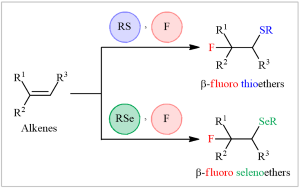
Recent Advances in Vicinal Fluorochalcogenation of Olefins

Pages 677-688

https://doi.org/10.22034/crl.2024.468181.1383

Rovnag Rzayev, Aytan Aghaisa Niyazova, Garay Surkhay Mirzoev, Ali A. Mohammed Ali Albeer

Abstract : This review highlights progress made for the direct 1,2-fluorochalcogenation of olefins C–C bonds for the one-pot synthesis of biologically important β-fluoro thioether and β-fluoro selenoether derivatives. For clarity, the topic is divided into two major parts. The first section covers methods of fluorosulfenylation reactions, while the second focuses exclusively on the fluoroselenation reactions

Eco-friendly antibacterial/antioxidant photoluminescent film based on gelatin/phycocyanin liposome/zero-valent nano iron/gold-iridium pigment

Pages 689-700

https://doi.org/10.22034/crl.2024.471504.1393

Sajad Pirsa, Atefe Eslami, Forogh Mohtarami, Mustafa Bener

Abstract The aim of this study was to produce biodegradable photoluminescent film that has antibacterial and antioxidant properties suitable for active food packaging. Based on this, gelatin was used to prepare the active film. Phycocyanin nanoliposome, zero-valent iron nanoparticle and gold/iridium composite photoluminescent pigment were used to modify the chemical structure of gelatin film. The central composite design was used to investigate the effect of phycocyanin nanoliposome, iron nanoparticle and pigment in investigating transparency, color properties and antioxidant property of films. The antibacterial properties of the films were investigated against three strains of Escherichia coli (Gram negative), Staphylococcus aureus (Gram positive) and Bacillus cereus (Gram positive). Scanning electron microscopy (SEM) images of pure gelatin film and gelatin/phycocyanin liposome/iron/photoluminescence pigment (Gel/NL/Fe/P) composite film were examined and compared. SEM images showed the smooth and coherent surface of the gelatin film, where liposome, iron and gold/iridium nanoparticles were visible on the film surface. Examining the transparency of the film and the color properties of the films confirmed the significant effect of nanoliposome on these properties. Phycocyanin strongly increased the antioxidant property of the film by about 40%. Iron nanoparticles increased the antioxidant property of gelatin film by about 20%. Liposome and zero valent iron significantly increased the antibacterial properties of the films. The antibacterial activity of the films was almost equal to that of Staphylococcus aureus and Bacillus cereus and more than Escherichia coli. Gel/NL/Fe/P films with the ability to produce green color in dark conditions, with antioxidant and antibacterial properties, can be used in active food packaging, and can also be used as sensors or smart kits.

Influence of graphene oxide on the catalytic activity of Fe3O4 nanoparticles

Pages 701-711

https://doi.org/10.22034/crl.2024.461585.1355

Robab Mohammadi, Rovnag Rzayev

Abstract In this research, a series of Fe3O4 and Fe3O4/Graphene oxide nanocompounds with various contents of graphene in the composite were prepared using iron chloride and graphene oxide as the starting materials. The synthesized Fe3O4/Graphene oxide was characterized by XRD, SEM, EDX, FT-IR, and UV–visible spectroscopy. The photocatalytic and sonocatalytic activities of the synthesized samples were investigated by the degradation of malachite green as a cationic dye. Fe3O4/Graphene oxide was found to be more efficient at photodegradation of malachite green. The photodegradation reaction fit well to a Langmuir-Hinshelwood kinetic model implying the reaction rate is depended on initial adsorption step. The quantities of the adsorption equilibrium constant (Kdye) and the kinetic rate constant of surface reaction (kc) were 0.91 (mg L−1)−1 and 2.32 mg L−1 min−1, respectively. Based on results, the rate constant of sonocatalysis was higher than that of photocatalysis. Finally, it has been concluded that graphene when employed as catalytic support for Fe3O4 increases its catalytic activity.

Quantum chemical analysis of isotopic effect in the [2 + 4] Diels−Alder cycloaddition reactions of naphthalene and anthracene with C2H2 and C2H4 molecules

Pages 712-718

https://doi.org/10.22034/crl.2024.466034.1372

S. M Mirtaheri, Reza Ghiasi, Hossein Anaraki-Ardakani

Abstract In the present article, DFT approach was used in the M06-2X/6–311G (d,p) level of theory to survey [2 + 4] Diels−Alder cycloaddition reactions of naphthalene and anthracene with C2H2 and C2H4 molecules. These reactions were analyzed energetically. Molecular orbital analysis of the reactants and products were illustrated. CC bond distance changes in the reactant, transition state and products were indicated. Thermodynamics and kinetic parameters of theses reactions were calculated. Replacing effect of hydrogens atoms of with C2H2 and C2H4 molecules with deuterium on the thermodynamics and kinetic parameters of theses reactions were explored.

Highly sensitive determination of nimesulide using Glassy Carbon Electrode Enhanced Graphene Oxide-Multi-walled Carbon Nanotubes

Pages 719-730

https://doi.org/10.22034/crl.2024.469494.1390

Adil Rashak, Faiq F Karam

Abstract Methods: NIM was determined utilizing (GO-MWCNTs/GCE) using DPV. The impact of different experimental factors, such as scan rate, pH, and aggregation time, on the voltammetric responses of NIM was assessed.

Results: NIM achieved an irreversible electrochemical reaction controlled by the diffusion-controlled electrode method at GO-MWCNTS/GCE. This research examined the relationship between peak oxidation current and concentration under optimal conditions. A calibration curve was plotted showing the linear range of 0.06-0.8 ppm and limited of detection of 0.000318 ppm. The approach was effectively used to detect NIM in drugs as well as in human serum and urine samples. Results refer that the chosen method is fast, responsive, and cost-effective. The sensor (GO-MWCNTs/GCE) had an excellent reproducibility and good repeatability.

The Role of Technical English Proficiency in Chemistry Education

Pages 731-741

https://doi.org/10.22034/crl.2024.460382.1346

Jafar Azamat, Mohammad Reza Khodadust, Amirmohammad Bahrami Maddah

Abstract In the world today, with its diverse specializations and branches of sciences, gaining an improved and more accurate understanding of scientific concepts and information is of vital significance. Chemistry is one of the fundamental sciences, the mastery of which enables individuals to make maximal use of this useful science. One of the important factors in learning chemistry is the use of the English for chemistry, which includes technical terms, accurate definitions, and experimentation methods. The use of specialized language helps individuals better understand complex concepts and easily communicate with others in the same field. The present study examines the central role of learning specialized language in studying and understanding chemical concepts as well as introducing the key points for optimal utilization by students and anyone interested in chemistry. This study demonstrates how mastering complex chemistry terminology and its unique nomenclature enhances understanding, facilitates effective communication, strengthens critical thinking, deepens content knowledge mastery, and ultimately improves the performance of chemistry learners.

Recent advances in the synthesis of trifluoromethyl ethers through the direct O-trifluoromethylation of alcohols

Pages 742-753

https://doi.org/10.22034/crl.2024.470142.1391

Rovnag Rzayev, Aytan Aghaisa Niyazova, Movlud Arastun Huseynov, V. H. Musayeva, Hani Mueen Razzaq

Abstract Abstract: In this review, the pivotal achievements and recent advances on direct O- trifluoromethylation of alcohols reported up to 2024 are retrospectively considered and their potency for synthesis of useful trifluoromethyl ethers is demonstrated. The reported data are organized according to main types of catalytic systems (i.e., metal-catalyzed/mediated, electro-catalyzed, base-mediated, and catalyst-free O-trifluoromethylations).